
- by Teacher Dave
Dutch Birthday Parties Explained: Vocabulary, Traditions, and Survival Tips for Expat Kids
Reading Time: 5 minutesMoving to the Netherlands comes with many cultural surprises, but few are as uniquely Dutch as the birthday party. For expat families, Dutch birthday celebrations can feel charming, confusing, loud, and incredibly organized all at once. From the famous “circle party” to congratulating everyone in the room, Dutch birthdays follow traditions that may be completely different from what international children are used to.
If your child has recently been invited to a Dutch birthday party, or you are planning one yourself, this guide explains the essential Dutch birthday vocabulary, common traditions, and practical survival tips to help expat kids feel confident and included.
Table of Contents
Why Dutch Birthday Parties Feel Different
Dutch culture values gezelligheid — a cozy, social atmosphere where everyone feels included. Birthday parties reflect this mindset. Instead of elaborate entertainment or expensive decorations, the focus is often on togetherness, conversation, games, and simple food.
Children’s birthday parties in the Netherlands are usually well-organized, start exactly on time, and often follow a predictable structure. Parents appreciate clarity, punctuality, and moderation, which can feel refreshing for some expat families and surprisingly strict for others.
For children, understanding the unwritten rules can make social life at school much easier.
Essential Dutch Birthday Vocabulary for Kids and Parents
Learning a few common Dutch birthday expressions helps expat children feel more comfortable during celebrations.
“Gefeliciteerd!”
This means “Congratulations!” and is the most important birthday phrase in the Netherlands.
What surprises many expats is that Dutch people congratulate not only the birthday child but also the parents, siblings, grandparents, and sometimes even close friends.
A typical exchange looks like this:
- “Gefeliciteerd met Emma!”
- “Dankjewel!”
“Trakteren”
Dutch children often bring treats to school on their birthday. This tradition is called trakteren.
Instead of a large classroom party, the birthday child hands out small snacks or goodies to classmates and teachers. Popular treats include:
- Mini cupcakes
- Fruit skewers
- Small bags of candy
- Homemade snacks
Many Dutch schools encourage healthy options.
“Verjaardag”
This simply means “birthday.”
Useful phrases include:
- “Wanneer ben je jarig?” — When is your birthday?
- “Fijne verjaardag!” — Happy birthday!
“Uitnodiging”
This means invitation.
Dutch birthday invitations are usually very direct and include:
- Start and end times
- Address
- RSVP details
- Whether parents should stay or leave
The Famous Dutch Circle Party
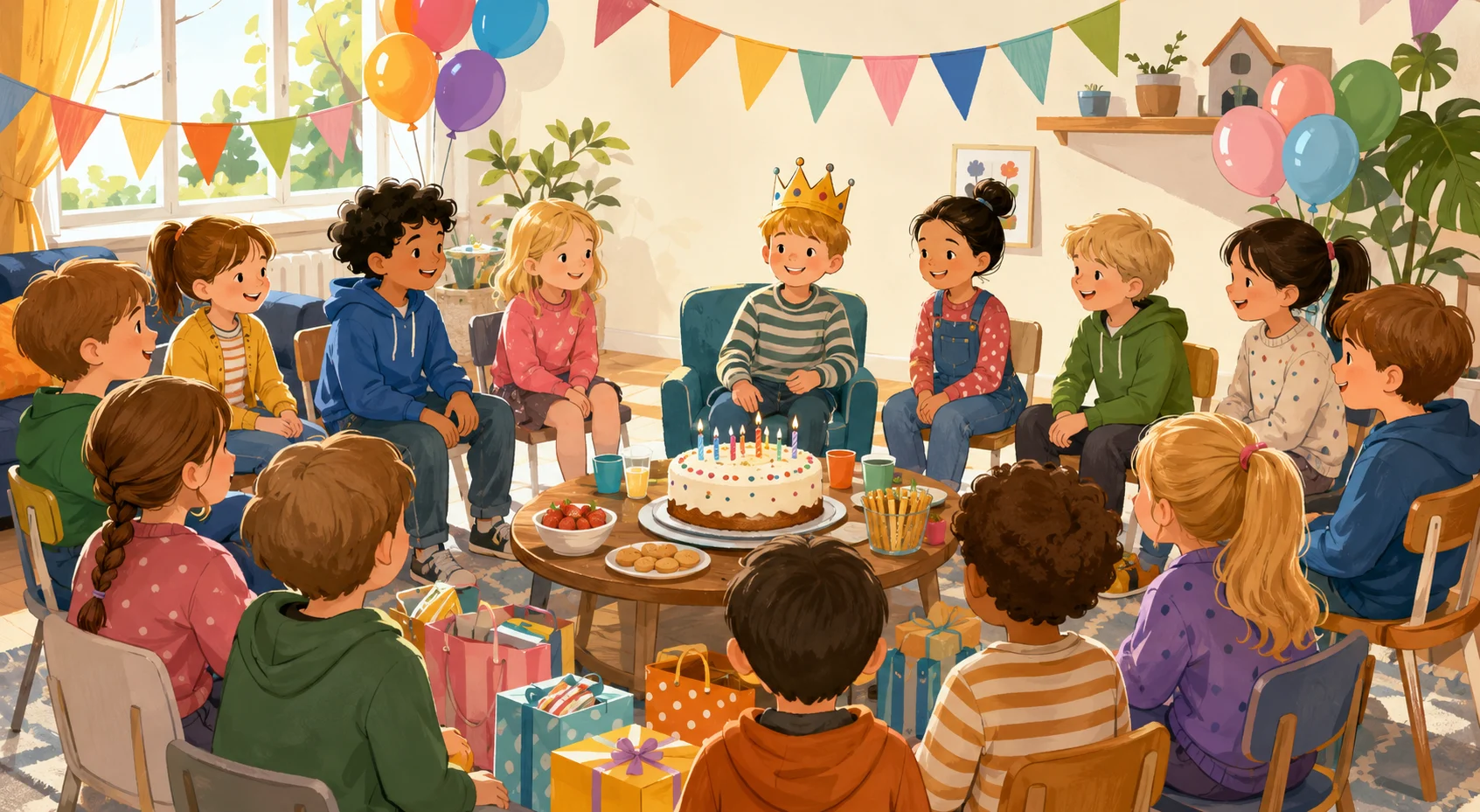
One of the most talked-about Dutch traditions is the “kringverjaardag,” or circle birthday.
At many family birthdays, chairs are arranged in a large circle around the room. Guests sit together, drink coffee, eat cake, and talk for hours.
For expat children, this may seem strange at first because:
- Everyone greets each person individually
- Adults often stay seated for long conversations
- There may be less entertainment than expected
Children’s parties are usually more active, but the circle setup still appears at many family gatherings.
Understanding this tradition helps expat families avoid cultural misunderstandings.
What Happens at a Typical Dutch Kids’ Birthday Party
Dutch children’s birthday parties are often surprisingly structured.
A common schedule might include:
- Arrival and cake
- Opening presents together
- Organized activity or game
- Snack or fries
- Pick-up time
Popular Dutch birthday activities include:
- Indoor playgrounds
- Treasure hunts
- Crafting
- Soccer
- Pancake restaurants
- Swimming parties
Most parties last between two and four hours.
Unlike in some countries, parents usually do not stay unless the child is very young.
Dutch Birthday Etiquette Expat Families Should Know
Understanding local etiquette helps children integrate more easily into Dutch social life.
Arrive on Time
Punctuality matters in Dutch culture. Arriving more than 10–15 minutes late without warning may seem rude.
RSVP Quickly
Dutch parents appreciate fast responses because parties are often carefully planned with exact numbers.
Do Not Overspend on Gifts
Birthday gifts are generally modest. Expensive presents can make other families uncomfortable.
Good gift ideas include:
- LEGO sets
- Craft supplies
- Books
- Board games
- Small toy kits
Label Everything
If your child brings a jacket, shoes, or swimming gear, label them clearly. Dutch birthday parties can become chaotic quickly.
Survival Tips for Expat Kids at Dutch Birthday Parties
Adjusting to a new culture can feel overwhelming for children. These practical tips can help expat kids enjoy Dutch birthdays with more confidence.
Learn Basic Dutch Greetings
Even knowing a few phrases can help children feel included.
Useful examples:
- “Hallo!”
- “Dankjewel!”
- “Gefeliciteerd!”
Dutch families usually appreciate any effort to speak the language.
Prepare for Direct Communication
Dutch children and parents tend to communicate very directly. This is usually not intended to sound rude.
For example:
- “You are late.”
- “I do not like this game.”
- “Please clean up now.”
Helping children understand this cultural style can prevent hurt feelings.
Expect Simpler Food
Dutch birthday food is often straightforward:
- Chips
- Fries
- Pancakes
- Cake
- Lemonade
Do not expect elaborate meals or themed catering at every party.
Encourage Independence
Dutch culture encourages children to be independent from a young age. Parents may expect children to:
- Hang up their own coats
- Introduce themselves
- Participate without parental help
This can initially feel intimidating for expat kids but often builds confidence quickly.
School Birthdays in the Netherlands
School birthdays are a major part of Dutch childhood culture.
Many schools allow the birthday child to:
- Wear a special birthday crown
- Walk through classrooms with a teacher
- Hand out treats
- Be celebrated with songs
Some schools also allow children to bring small non-food gifts instead of snacks.
Each school has different rules, so it is worth checking guidelines in advance.
Common Cultural Shocks for Expat Parents
Many international parents experience similar surprises at Dutch birthday parties.
Limited Guest Lists
Dutch parties are often smaller and more selective than in some cultures.
Clear Ending Times
Dutch parents frequently specify exact pick-up times and expect punctual collection.
Minimal Extravagance
Even affluent families often keep parties relatively simple and practical.
Rain Does Not Cancel Outdoor Plans
Dutch children are used to cycling and playing outside in all weather conditions. A little rain rarely changes party plans.
How Dutch Birthday Traditions Help Children Integrate
Birthday parties are more than social events in the Netherlands. They are important opportunities for children to build friendships, confidence, and cultural understanding.
For expat kids, participating in Dutch birthday traditions helps them:
- Feel included at school
- Learn local social norms
- Practice Dutch naturally
- Build friendships outside the classroom
The first few parties may feel unfamiliar, but most children adapt quickly once they understand the routines.
Conclusion
Dutch birthday parties may seem unusual at first, especially for newly arrived expat families. Between congratulating everyone in the room, eating cake in a circle, and following highly organized schedules, Dutch celebrations have their own unique rhythm.
However, once expat children understand the vocabulary, traditions, and expectations, these parties often become one of the easiest ways to make friends and feel part of Dutch life. With a little preparation, openness, and cultural curiosity, Dutch birthday parties can transform from confusing experiences into memorable childhood adventures.

Teacher Dave
Teacher Dave is an enthusiastic and dedicated educator behind OnlineDutch4Kids, a platform designed to help expat children aged 5 to 12 learn Dutch in a fun and accessible way. With a strong passion for language learning and child development, he focuses on creating engaging, interactive lessons that make Dutch approachable for young learners who may be new to the language. Through Free Dutch Online, Teacher Dave combines storytelling, games, songs, and visual materials to keep children motivated and curious. His teaching style is patient, encouraging, and tailored to the needs of international families, helping kids build confidence in speaking, listening, reading, and writing Dutch at their own pace. By blending education with creativity, Teacher Dave has built a supportive online learning environment where children from around the world can connect with the Dutch language in an enjoyable and meaningful way.