
- by Teacher Dave
How Bilingual Kids Switch Between Languages (and Why It’s Normal)
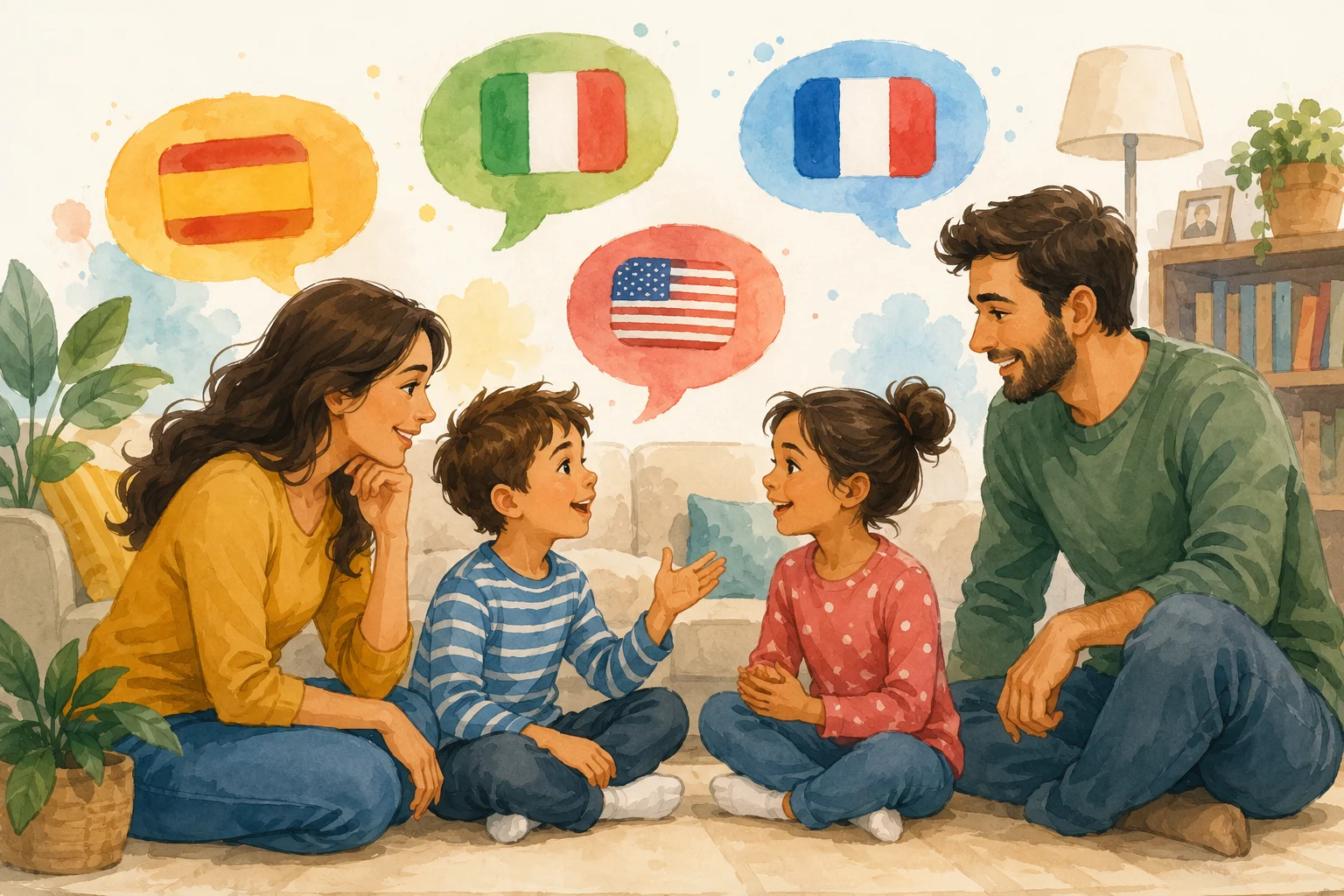
Reading Time: 5 minutesRaising bilingual children is becoming more common in families around the world. Whether kids grow up hearing two languages at home or learn one language in school and another from family members, bilingual development often comes with an interesting behavior: switching between languages mid-sentence.
For many parents, this can seem confusing at first. One moment a child is speaking English, and the next they insert words from Spanish, Dutch, French, or another language. Some parents worry this means their child is confused or struggling with language development. In reality, language switching is a completely normal and healthy part of bilingualism.
Understanding why bilingual children mix languages can help parents feel more confident and better support their child’s communication skills.
Table of Contents
What Is Language Switching?
Language switching, also called code-switching, happens when bilingual speakers alternate between two languages during conversation. Children may switch languages between sentences or even within the same sentence.
For example, a child might say:
- “I want leche with my cereal.”
- “Can you help me mijn schoenen vinden?”
- “We played outside y luego we ate lunch.”
This behavior is common among bilingual adults as well. It reflects flexibility in language use rather than confusion.
Why Bilingual Kids Switch Between Languages
There are several reasons bilingual children naturally move between languages.
They Use the Word That Comes to Mind First
Sometimes a child knows a word better in one language than another. If they cannot quickly recall the matching word in the other language, they simply use the word they know.
This is especially common with younger children whose vocabulary is still developing in both languages.
For example, a child may know the word “grandma” in English but only know “abuela” in Spanish. Instead of stopping the conversation, they smoothly insert the word they remember.
Code-Switching Helps Communication Flow
Bilingual kids often switch languages to keep speaking naturally and confidently. Rather than pausing to search for vocabulary, they continue expressing themselves using all the language tools available to them.
This actually demonstrates strong communication skills. The child is prioritizing connection and meaning over strict language separation.
Kids Adapt to Their Environment
Children are highly aware of who speaks which language around them. A bilingual child may use one language with a parent and another with siblings or friends.
When multiple languages are present in the same environment, switching can happen automatically. For example, a child may speak English at school all day and then blend it with their home language during family conversations.
This flexibility is part of how bilingual brains manage communication efficiently.
Is Language Switching a Sign of Confusion?
One of the biggest myths about bilingualism is that children who mix languages are confused. Research consistently shows this is not true.
Bilingual children are capable of learning and separating multiple languages from an early age. Even babies can recognize differences between languages long before they begin speaking.
Mixing languages is usually a strategic and natural behavior, not a developmental problem.
In fact, bilingual children often show strong cognitive flexibility because their brains regularly manage two language systems.
The Cognitive Benefits of Bilingualism
Growing up bilingual can provide several long-term advantages.
Improved Problem-Solving Skills
Bilingual children frequently switch between language systems, which strengthens mental flexibility and problem-solving abilities.
Better Attention Control
Managing two languages helps children practice focusing attention and filtering information.
Greater Cultural Awareness
Learning multiple languages often exposes children to different traditions, perspectives, and communication styles.
Easier Future Language Learning
Children who grow up bilingual may find it easier to learn additional languages later in life.
When Parents Should Not Worry
In most cases, language switching is completely normal. Parents generally do not need to worry if their child:
- Mixes words from two languages
- Prefers one language in certain situations
- Switches languages depending on who they are talking to
- Uses vocabulary unevenly across languages
Bilingual language development does not always happen evenly. A child may become stronger in one language temporarily based on school exposure, friendships, or media consumption.
This natural imbalance often shifts over time.
How Parents Can Support Bilingual Development
Parents can encourage healthy bilingual growth with simple daily habits.
Continue Speaking Both Languages
Consistency matters more than perfection. Regular exposure to both languages helps children strengthen vocabulary and comprehension naturally.
Read Books in Multiple Languages
Reading aloud supports vocabulary development and reinforces grammar patterns.
Avoid Correcting Every Language Switch
Constant correction can make children feel self-conscious. Instead, model the sentence naturally in the target language.
For example:
Child: “I want agua.”
Parent: “You want water? Here’s your water.”
Create Positive Language Experiences
Songs, games, storytelling, travel, and conversations with relatives all help children build emotional connections to both languages.
Why Some Bilingual Kids Prefer One Language
It is common for children to favor the language they hear most often outside the home. School, friends, television, and online content can strongly influence language preference.
This does not mean the home language is being lost permanently. Continued exposure and positive reinforcement can maintain bilingual skills over time.
Parents should avoid turning language learning into pressure or conflict. Encouragement works far better than forcing language use.
The Difference Between Language Delay and Normal Bilingual Development
Parents sometimes worry bilingualism causes speech delays. While bilingual children may distribute vocabulary across two languages, bilingualism itself does not cause language disorders.
A true language delay typically appears in both languages, not just one.
If parents have concerns about speech development, they should consult a qualified speech-language professional familiar with bilingual children. Evaluating bilingual children requires understanding how multilingual development works.
Conclusion
Bilingual kids naturally switch between languages as part of healthy communication and cognitive development. Code-switching is not a sign of confusion. Instead, it reflects adaptability, creativity, and growing language skills.
Children who grow up bilingual learn how to navigate multiple linguistic environments with impressive flexibility. Their brains are constantly organizing vocabulary, grammar, and social context across two languages.
For parents, the best approach is patience, encouragement, and consistent exposure to both languages. Over time, bilingual children develop the ability to communicate effectively in ways that feel natural to them.
Language switching is not a problem to fix. It is a normal part of being bilingual.

Teacher Dave
Teacher Dave is an enthusiastic and dedicated educator behind OnlineDutch4Kids, a platform designed to help expat children aged 5 to 12 learn Dutch in a fun and accessible way. With a strong passion for language learning and child development, he focuses on creating engaging, interactive lessons that make Dutch approachable for young learners who may be new to the language. Through Free Dutch Online, Teacher Dave combines storytelling, games, songs, and visual materials to keep children motivated and curious. His teaching style is patient, encouraging, and tailored to the needs of international families, helping kids build confidence in speaking, listening, reading, and writing Dutch at their own pace. By blending education with creativity, Teacher Dave has built a supportive online learning environment where children from around the world can connect with the Dutch language in an enjoyable and meaningful way.