
- by Teacher Dave
Seasonal Dutch Vocabulary for Kids: Spring, Summer, Autumn & Winter
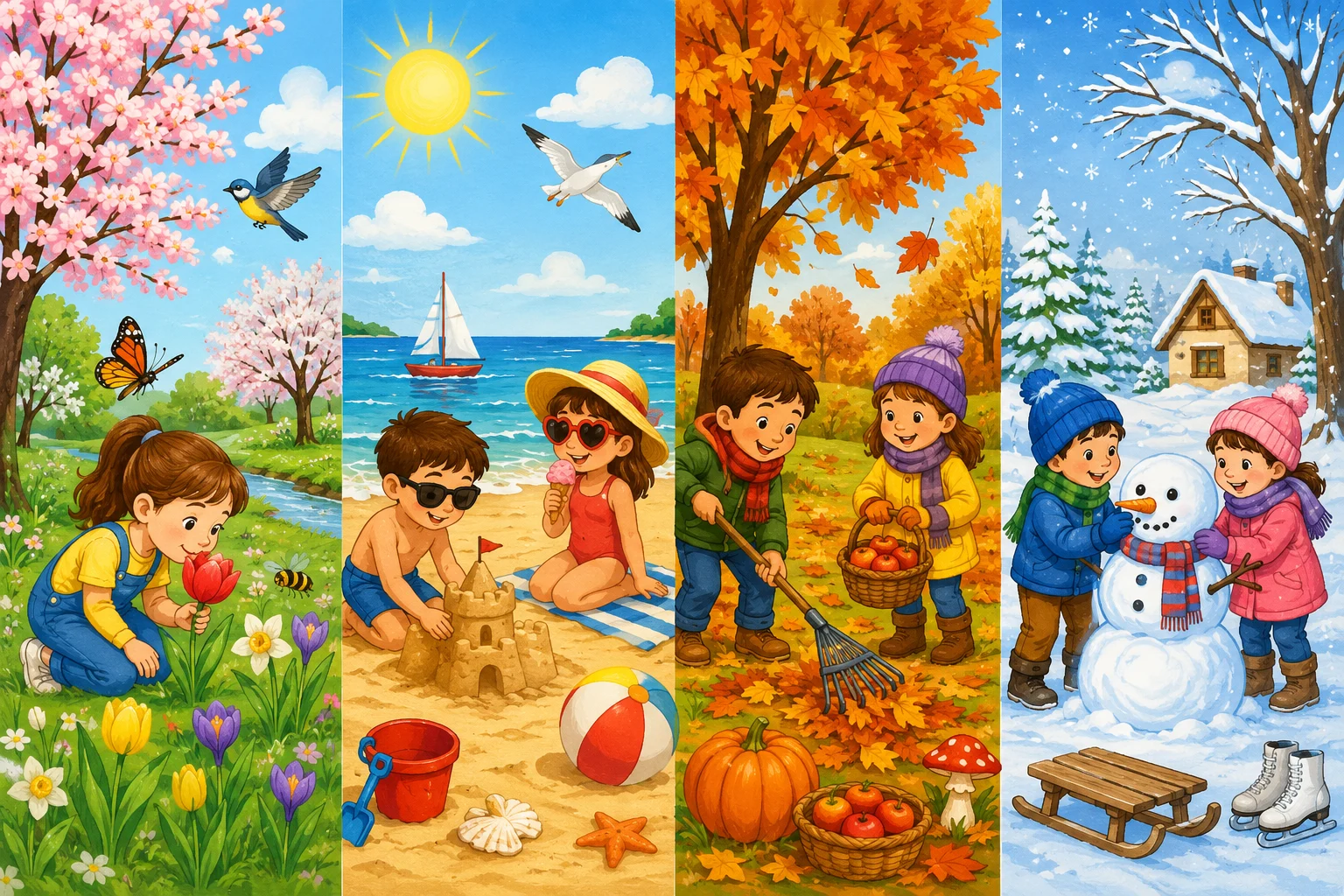
Reading Time: 4 minutesLearning Dutch can be exciting for children, especially when lessons connect to the changing seasons. Teaching seasonal Dutch vocabulary helps kids understand everyday conversations, weather, holidays, clothing, nature, and activities throughout the year. By learning words linked to spring, summer, autumn, and winter, children can build practical language skills while having fun.
In this guide, we’ll explore essential Dutch seasonal vocabulary for kids, including simple words, phrases, and examples that make learning easy and memorable.
Table of Contents
Why Seasonal Vocabulary Helps Kids Learn Dutch Faster
Children learn languages more effectively when vocabulary is tied to real-life experiences. Seasons naturally introduce new sights, weather conditions, foods, holidays, and outdoor activities. This makes Dutch vocabulary more engaging and easier to remember.
Seasonal themes also encourage:
- Better word association
- Visual learning opportunities
- Everyday language practice
- Interactive games and activities
- Improved pronunciation through repetition
By following the yearly cycle, kids continuously revisit and reinforce Dutch vocabulary in meaningful ways.
Dutch Vocabulary for Spring (Lente)
Spring in Dutch is called “lente.” It is associated with flowers, rain, baby animals, and warmer weather.
Common Spring Words in Dutch
| English | Dutch |
|---|---|
| Spring | Lente |
| Flower | Bloem |
| Rain | Regen |
| Sun | Zon |
| Butterfly | Vlinder |
| Bird | Vogel |
| Grass | Gras |
| Tree | Boom |
| Bee | Bij |
| Rainbow | Regenboog |
Simple Dutch Spring Sentences for Kids
- De bloemen groeien.
(The flowers are growing.) - Ik zie een vlinder.
(I see a butterfly.) - Het regent vandaag.
(It is raining today.)
Fun Spring Activities for Learning Dutch
Kids can strengthen vocabulary through:
- Flower coloring pages with Dutch labels
- Nature walks
- Dutch weather charts
- Spring scavenger hunts
Interactive learning keeps children motivated and improves retention.
Dutch Vocabulary for Summer (Zomer)
Summer, or “zomer” in Dutch, is often children’s favorite season because of holidays, beaches, sunshine, and outdoor fun.
Common Summer Words in Dutch
| English | Dutch |
|---|---|
| Summer | Zomer |
| Beach | Strand |
| Ice cream | IJs |
| Swimming | Zwemmen |
| Sun | Zon |
| Vacation | Vakantie |
| Sunglasses | Zonnebril |
| Sea | Zee |
| Sand | Zand |
| Hot | Warm |
Simple Dutch Summer Sentences for Kids
- Wij gaan naar het strand.
(We are going to the beach.) - Ik eet ijs.
(I eat ice cream.) - De zon schijnt.
(The sun is shining.)
Summer Learning Ideas
Parents and teachers can use:
- Beach-themed flashcards
- Dutch summer songs
- Outdoor vocabulary games
- Water play with Dutch instructions
Summer activities create relaxed learning moments that feel natural and enjoyable.
Dutch Vocabulary for Autumn (Herfst)
Autumn is called “herfst” in Dutch. This season introduces colorful leaves, cooler weather, and cozy indoor activities.
Common Autumn Words in Dutch
| English | Dutch |
|---|---|
| Autumn | Herfst |
| Leaf | Blad |
| Wind | Wind |
| Raincoat | Regenjas |
| Pumpkin | Pompoen |
| Apple | Appel |
| Mushroom | Paddenstoel |
| Cloud | Wolk |
| Cold | Koud |
| Jacket | Jas |
Simple Dutch Autumn Sentences for Kids
- De bladeren vallen.
(The leaves are falling.) - Het is koud buiten.
(It is cold outside.) - Ik draag een jas.
(I wear a jacket.)
Creative Autumn Vocabulary Practice
Autumn vocabulary becomes fun with:
- Leaf collecting activities
- Pumpkin crafts
- Dutch storytelling
- Seasonal drawing projects
Hands-on learning helps children connect Dutch words with real-world objects.
Dutch Vocabulary for Winter (Winter)
Winter in Dutch is also called “winter.” Kids often enjoy learning winter words because of snow, holidays, and festive traditions.
Common Winter Words in Dutch
| English | Dutch |
|---|---|
| Winter | Winter |
| Snow | Sneeuw |
| Ice | IJs |
| Scarf | Sjaal |
| Gloves | Handschoenen |
| Hat | Muts |
| Snowman | Sneeuwpop |
| Cold | Koud |
| Skate | Schaatsen |
| Fireplace | Open haard |
Simple Dutch Winter Sentences for Kids
- Er ligt sneeuw.
(There is snow.) - Ik draag handschoenen.
(I wear gloves.) - Wij maken een sneeuwpop.
(We are making a snowman.)
Winter Dutch Learning Activities
Fun ideas include:
- Winter bingo in Dutch
- Snow-themed vocabulary cards
- Dutch holiday songs
- Indoor storytelling games
Winter learning activities can make language lessons feel magical and exciting.
Easy Tips for Teaching Seasonal Dutch Vocabulary to Kids
Teaching children Dutch vocabulary works best when lessons are playful and repetitive.
Use Visual Learning
Children remember words faster when they see pictures, objects, or demonstrations.
Repeat Vocabulary Often
Repeat seasonal words throughout the day during routines, games, and conversations.
Incorporate Songs and Rhymes
Dutch songs help improve pronunciation and listening skills naturally.
Practice with Real-Life Situations
Talk about the current weather, clothing, or outdoor activities in Dutch every day.
Make Learning Interactive
Flashcards, puzzles, crafts, and storytelling keep kids actively engaged.
Best Seasonal Dutch Words for Beginners
If your child is just starting to learn Dutch, begin with easy and practical words:
- Zon (Sun)
- Regen (Rain)
- Bloem (Flower)
- Strand (Beach)
- Blad (Leaf)
- Sneeuw (Snow)
These simple words appear frequently in everyday conversations and seasonal activities.
How Parents Can Support Dutch Learning at Home
Parents do not need to speak fluent Dutch to help children learn seasonal vocabulary. Small daily habits make a big difference.
Helpful strategies include:
- Labeling seasonal objects around the house
- Watching Dutch cartoons
- Reading Dutch picture books
- Practicing weather discussions
- Using Dutch during playtime
Consistency matters more than perfection.
Conclusion
Teaching seasonal Dutch vocabulary for kids is a fun and effective way to build language skills naturally throughout the year. By connecting words to spring flowers, summer beach trips, autumn leaves, and winter snow, children develop stronger memory associations and greater confidence in speaking Dutch.
Using games, songs, storytelling, and hands-on activities makes learning enjoyable while improving vocabulary retention. Whether at home or in the classroom, seasonal Dutch lessons help kids stay engaged and excited about language learning all year long.

Teacher Dave
Teacher Dave is an enthusiastic and dedicated educator behind OnlineDutch4Kids, a platform designed to help expat children aged 5 to 12 learn Dutch in a fun and accessible way. With a strong passion for language learning and child development, he focuses on creating engaging, interactive lessons that make Dutch approachable for young learners who may be new to the language. Through Free Dutch Online, Teacher Dave combines storytelling, games, songs, and visual materials to keep children motivated and curious. His teaching style is patient, encouraging, and tailored to the needs of international families, helping kids build confidence in speaking, listening, reading, and writing Dutch at their own pace. By blending education with creativity, Teacher Dave has built a supportive online learning environment where children from around the world can connect with the Dutch language in an enjoyable and meaningful way.