
- by Teacher Dave
Should You Choose International or Dutch Schooling? A Complete Guide for Parents
Reading Time: 3 minutesTable of Contents
Should You Choose International or Dutch Schooling? A Complete Guide for Parents
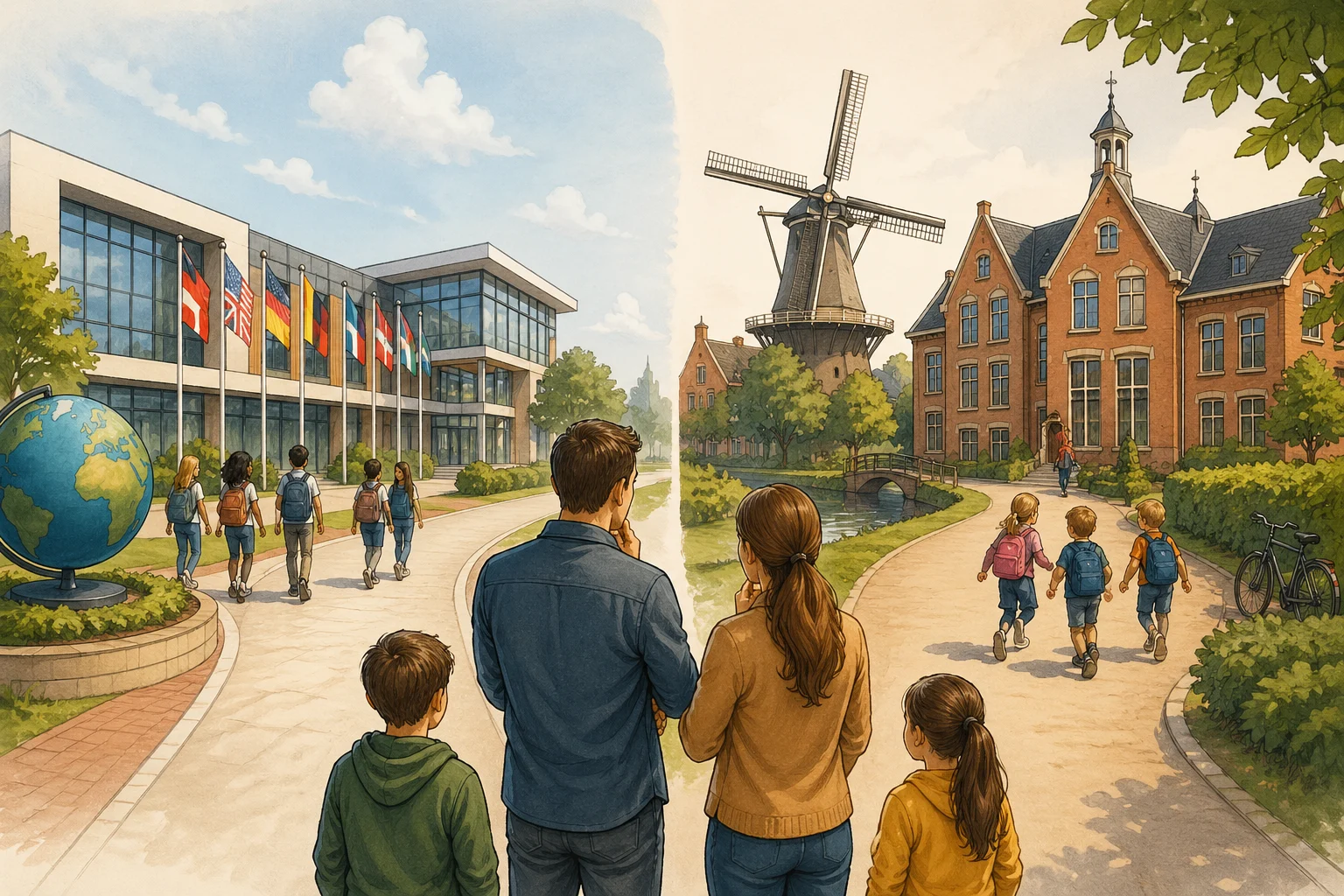
Choosing the right school system for your child is one of the most important decisions you’ll make as a parent. If you’re living in the Netherlands or planning to relocate, you’ll likely face a key question: should you choose international schooling or the Dutch education system? Each option offers unique advantages and challenges, and the right choice depends on your child’s needs, your family’s future plans, and your financial situation.
Understanding the Dutch Education System
The Dutch education system is known for its high quality, structured pathways, and strong academic outcomes. Public schools are government-funded, making them affordable or even free, and they follow a nationally regulated curriculum.
Children typically attend primary school (basisschool) until age 12, after which they are placed into different secondary education tracks based on ability. These tracks range from vocational education (VMBO) to pre-university education (VWO).
One of the biggest advantages of Dutch schools is integration. Your child will learn the language, adapt to local culture, and build friendships within the community. However, the system can be challenging for non-Dutch speakers, especially older children who may struggle to catch up linguistically.
What International Schools Offer
International schools are designed for expatriate families and globally mobile students. They offer globally recognized curricula such as the International Baccalaureate (IB), British (IGCSE/A-Levels), or American systems.
Classes are typically taught in English, which can ease the transition for children who do not speak Dutch. International schools also tend to have diverse student populations, which fosters a global mindset and cultural awareness.
However, these benefits come at a cost. Tuition fees can be significant, often ranging from several thousand to over €20,000 per year. Additionally, international schools may not provide the same level of integration into Dutch society.
Key Factors to Consider
When deciding between international and Dutch schooling, several factors should guide your choice.
Language is often the first consideration. If your child does not speak Dutch and you plan to stay short-term, international schooling may be the smoother option. On the other hand, if you intend to settle long-term, learning Dutch early can be a major advantage.
Future mobility also matters. International curricula are widely recognized, making it easier for your child to transition to schools or universities in other countries. Dutch education, while excellent, is more tailored to the national system.
Cost is another critical factor. Dutch public schools are far more affordable, while international schools require a substantial financial commitment.
Your child’s personality and adaptability should not be overlooked. Some children thrive in new linguistic environments, while others may feel overwhelmed and benefit from a familiar language setting.
Pros and Cons at a Glance
Dutch schools offer affordability, strong academic standards, and local integration, but require language adaptation and can be less flexible internationally.
International schools provide continuity, English-language instruction, and global recognition, but are expensive and may limit local cultural immersion.
Making the Right Choice for Your Family
There is no one-size-fits-all answer. Some families even choose a hybrid approach, starting their children in international schools and later transitioning to Dutch education once they’ve gained language skills.
It’s also worth visiting schools, speaking with other parents, and understanding your child’s preferences before making a decision. Education is not just about academics—it’s about well-being, confidence, and long-term development.
Conclusion
Deciding between international and Dutch schooling ultimately comes down to your family’s priorities. If you value global flexibility, English-language instruction, and a smooth transition, international schools may be the better choice. If your focus is on integration, affordability, and long-term residence in the Netherlands, the Dutch system offers significant advantages. By carefully weighing your child’s needs, your future plans, and practical considerations like cost and language, you can make a decision that sets your child up for success.

Teacher Dave
Teacher Dave is an enthusiastic and dedicated educator behind OnlineDutch4Kids, a platform designed to help expat children aged 5 to 12 learn Dutch in a fun and accessible way. With a strong passion for language learning and child development, he focuses on creating engaging, interactive lessons that make Dutch approachable for young learners who may be new to the language. Through Free Dutch Online, Teacher Dave combines storytelling, games, songs, and visual materials to keep children motivated and curious. His teaching style is patient, encouraging, and tailored to the needs of international families, helping kids build confidence in speaking, listening, reading, and writing Dutch at their own pace. By blending education with creativity, Teacher Dave has built a supportive online learning environment where children from around the world can connect with the Dutch language in an enjoyable and meaningful way.