
- by Teacher Dave
How to Support Your Child’s Dutch Learning at Home (Even If You Don’t Speak It)
Reading Time: 4 minutesRaising a child in a multilingual environment can feel overwhelming—especially when your child is learning Dutch and you don’t speak a word of it yourself. The good news is that you don’t need to be fluent to play a powerful role in your child’s language development.
With the right strategies, tools, and mindset, you can actively support their learning and even turn it into a bonding experience.
Table of Contents
Create a Language-Rich Environment
Children learn languages best when they are surrounded by them. Even if you don’t understand Dutch, you can still fill your home with it. Think of Dutch as something your child experiences daily, not just something they study.
Play Dutch songs in the background, turn on Dutch cartoons, or use audiobooks designed for children. Exposure helps your child get used to pronunciation, rhythm, and common expressions. Over time, this passive listening builds familiarity and confidence.
Label everyday items around your house in Dutch. For example, place notes on objects like “deur” (door), “tafel” (table), or “boek” (book). This visual reinforcement helps your child associate words with real-world objects.
Use Technology to Your Advantage
You don’t need to be the teacher—technology can help fill that gap. There are countless apps, websites, and YouTube channels designed specifically for children learning Dutch.
Choose apps that are interactive and engaging rather than overly academic. Gamified learning keeps children motivated and encourages consistency. Watching Dutch-language videos together can also be a fun way to learn. Even if you don’t understand everything, your child will appreciate your involvement.
Subtitles can be especially helpful. Start with Dutch audio and English subtitles, then gradually switch to Dutch subtitles as your child improves.
Encourage Daily Practice Without Pressure
Consistency matters more than perfection. Instead of long study sessions, aim for short, daily interactions with the language.
Encourage your child to share a new word or phrase they learned each day. Ask them to teach it to you—this reinforces their understanding and boosts their confidence. You don’t need to correct them; simply showing interest makes a big difference.
Try incorporating Dutch into routines. For example, counting in Dutch while setting the table or naming foods during meals. These small habits make learning feel natural rather than forced.
Read Together (Even If You Don’t Understand Every Word)
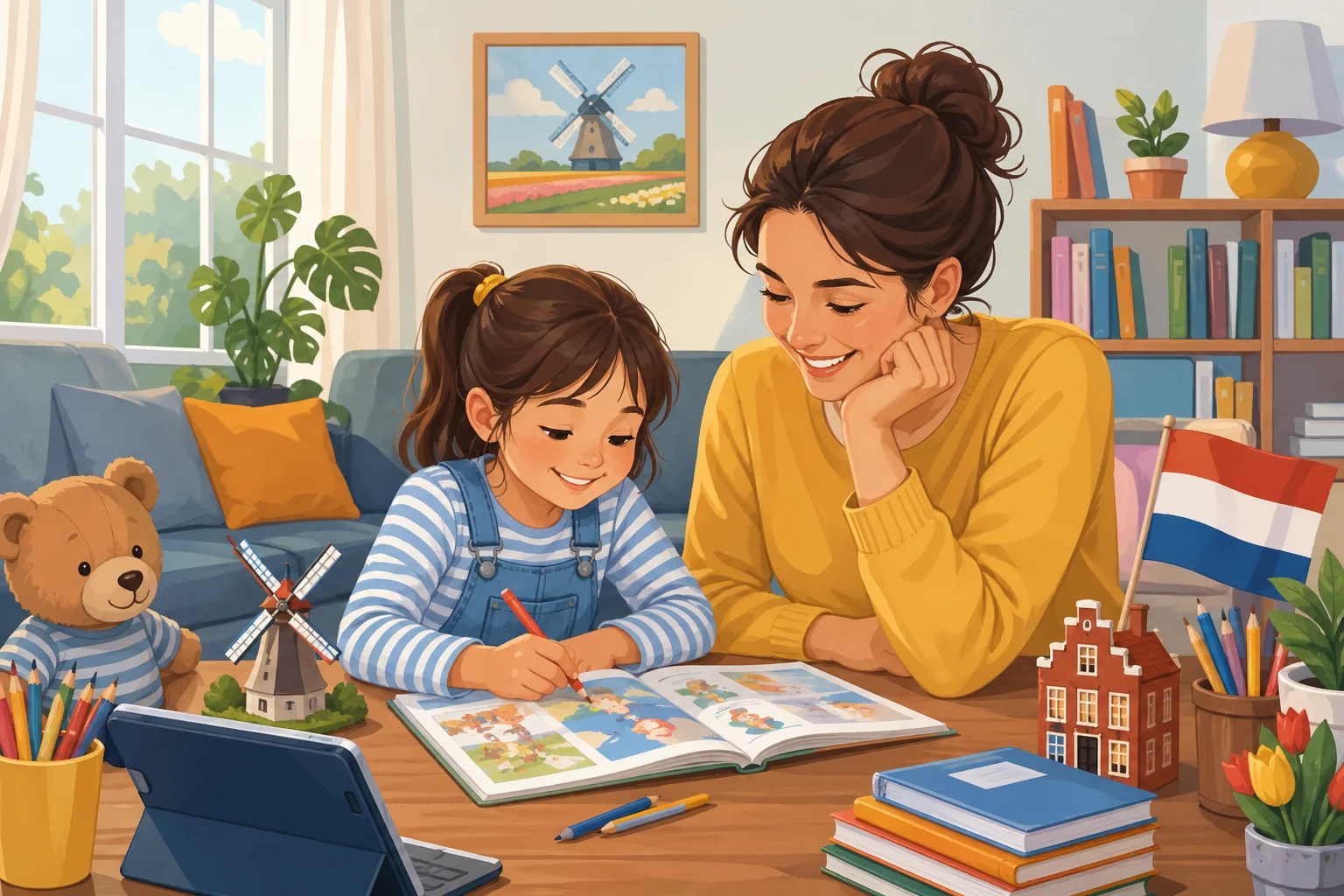
Reading is one of the most effective ways to build vocabulary and comprehension. Choose simple Dutch children’s books with illustrations that help tell the story.
Even if you don’t understand the text, you can still engage by asking questions about the pictures and encouraging your child to explain what’s happening. This strengthens both language skills and critical thinking.
Let your child take the lead. If they’re more advanced, they can read aloud to you and translate parts of the story. This not only reinforces their learning but also builds confidence.
Build Confidence Through Encouragement
One of the biggest challenges in language learning is fear of making mistakes. Your role as a parent is to create a safe and supportive environment where your child feels comfortable trying.
Celebrate effort, not just accuracy. If your child attempts to speak Dutch, acknowledge it positively—even if it’s not perfect. Avoid correcting every mistake, as this can discourage them from speaking at all.
Confidence grows when children feel supported, not judged.
Connect With Native Speakers and Community
If possible, expose your child to native Dutch speakers. This could be through playdates, community events, or language groups. Real-life interaction is invaluable for developing conversational skills.
If in-person opportunities are limited, consider online language exchange programs or virtual tutoring. Hearing and speaking with native speakers helps your child understand natural speech patterns and cultural context.
Make Learning Fun and Personal
Children learn best when they are interested and emotionally engaged. Find ways to connect Dutch learning to your child’s hobbies and interests.
If they love music, explore Dutch songs. If they enjoy drawing, encourage them to label their artwork in Dutch. If they like games, find Dutch-language versions or incorporate vocabulary into playtime.
The more enjoyable the process, the more likely your child will stay motivated.
Be a Learning Partner, Not Just a Supervisor
You don’t need to be an expert—you just need to be involved. Show curiosity and willingness to learn alongside your child.
Ask questions, try repeating words, and laugh at your mistakes together. This creates a positive learning atmosphere and shows your child that learning a language is a journey, not a test.
When your child sees you making an effort, they’re more likely to stay engaged themselves.
Conclusion
Supporting your child’s Dutch learning at home is absolutely possible—even if you don’t speak the language. What matters most is not your fluency, but your involvement, encouragement, and consistency. By creating a language-rich environment, using helpful tools, and making learning fun, you give your child the confidence and exposure they need to succeed. Over time, your support will not only help them learn Dutch but also foster a lifelong love for languages and learning.

Teacher Dave
Teacher Dave is an enthusiastic and dedicated educator behind OnlineDutch4Kids, a platform designed to help expat children aged 5 to 12 learn Dutch in a fun and accessible way. With a strong passion for language learning and child development, he focuses on creating engaging, interactive lessons that make Dutch approachable for young learners who may be new to the language. Through Free Dutch Online, Teacher Dave combines storytelling, games, songs, and visual materials to keep children motivated and curious. His teaching style is patient, encouraging, and tailored to the needs of international families, helping kids build confidence in speaking, listening, reading, and writing Dutch at their own pace. By blending education with creativity, Teacher Dave has built a supportive online learning environment where children from around the world can connect with the Dutch language in an enjoyable and meaningful way.