
- by Teacher Dave
How Kids Can Learn Dutch Through Play (Ages 5–8)
Reading Time: 3 minutesLearning a new language at a young age doesn’t have to feel like schoolwork. In fact, for children aged 5 to 8, play is one of the most powerful ways to absorb and retain a new language like Dutch. At this stage, kids are naturally curious, imaginative, and highly receptive to sounds and patterns.
When learning is embedded in fun activities, it becomes effortless and enjoyable.
Table of Contents
Why Play-Based Learning Works for Language Acquisition
Children in this age group learn best through interaction, repetition, and emotional engagement. Traditional memorization techniques often fall flat, but games, songs, and storytelling activate multiple senses at once. This strengthens memory and helps children associate Dutch words with real-life situations rather than abstract concepts.
Play also removes the fear of making mistakes. When kids are having fun, they are more willing to try new words, experiment with pronunciation, and build confidence naturally.
Interactive Games That Build Dutch Vocabulary
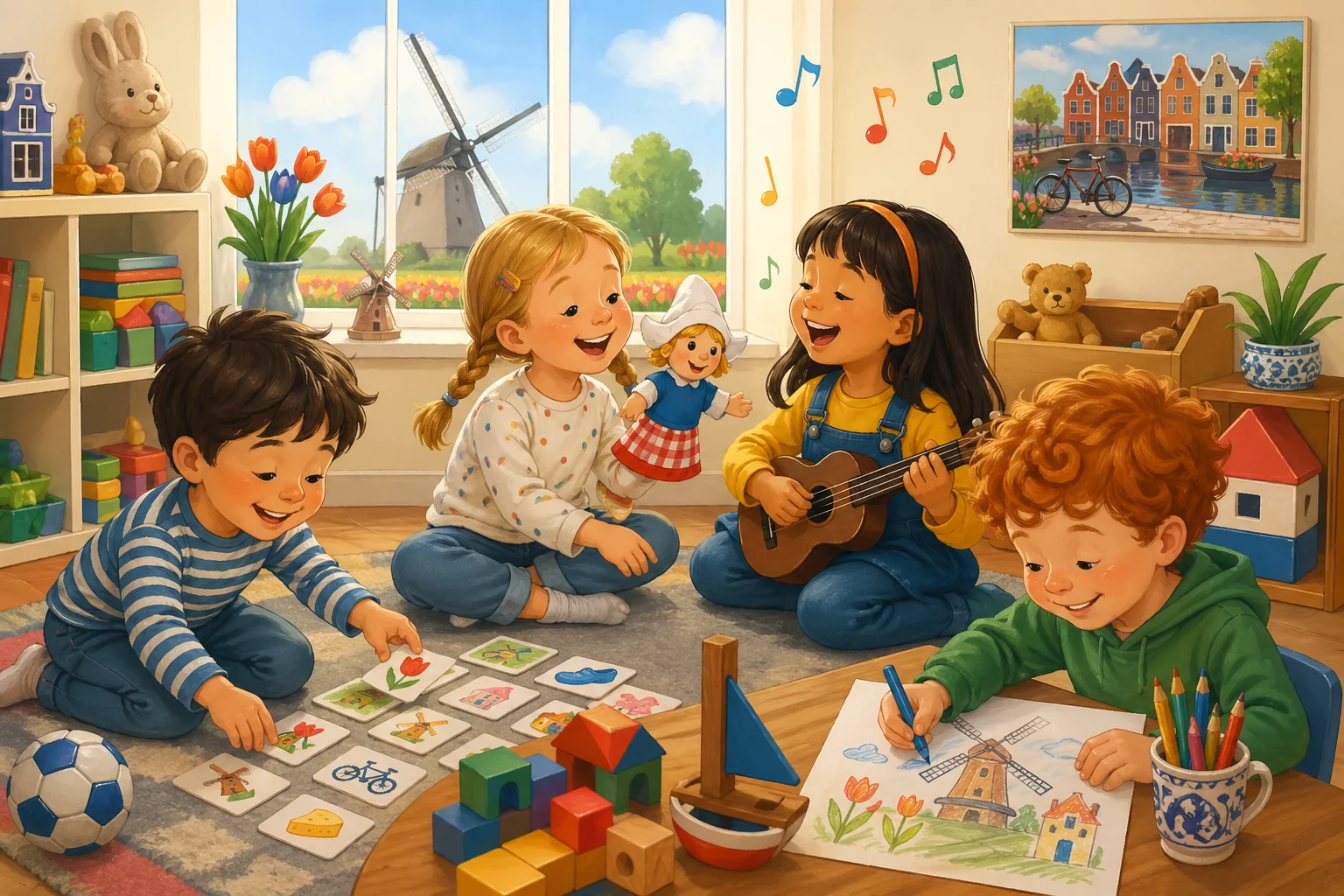
Simple games can introduce and reinforce Dutch vocabulary effectively. Think of activities like memory card games with pictures and words, scavenger hunts where kids find objects and name them in Dutch, or role-playing games like “shopkeeper” where they practice everyday phrases.
Board games can also be adapted by incorporating Dutch instructions or requiring players to speak Dutch during their turns. Even classic games like “Simon Says” become language lessons when commands are given in Dutch.
Using Music and Songs to Reinforce Learning
Music is a powerful tool for language learning. Dutch children’s songs are catchy, repetitive, and easy to follow, making them perfect for young learners. Singing helps with pronunciation, rhythm, and sentence structure without feeling like practice.
Encourage kids to sing along, act out the lyrics, or even create their own simple songs using Dutch words they’ve learned. This not only reinforces vocabulary but also boosts creativity.
Storytelling and Imagination in Dutch
Stories capture children’s attention like nothing else. Reading simple Dutch books or telling stories using basic vocabulary helps kids understand context and sentence flow. You can make storytelling interactive by asking questions, encouraging kids to guess what happens next, or letting them act out parts of the story.
Puppets and toys can also bring stories to life, making the experience more engaging and memorable.
Everyday Activities as Learning Opportunities
Language learning doesn’t need to be limited to structured playtime. Everyday routines are full of opportunities to practice Dutch. Naming objects around the house, counting steps, or describing actions like eating, dressing, or playing can build vocabulary naturally.
For example, during snack time, you can name foods in Dutch, or while getting dressed, talk about colors and clothing items. These small, consistent exposures make a big difference over time.
Digital Tools and Apps for Dutch Learning
There are many child-friendly apps and online resources designed to teach Dutch through interactive games and visuals. These tools often include animations, quizzes, and rewards that keep kids motivated.
However, screen time should complement—not replace—real-world interaction. The best results come from combining digital learning with hands-on play and conversation.
Encouraging Consistency Without Pressure
Consistency is key, but it’s important to keep the experience positive. Short, frequent sessions are far more effective than long, forced lessons. Even 10–15 minutes of playful Dutch exposure each day can lead to noticeable progress.
Celebrate small wins, like learning a new word or forming a simple sentence. Encouragement builds confidence and keeps kids excited about learning.
Conclusion
Teaching Dutch to children aged 5 to 8 doesn’t require strict lessons or complex methods. Through play, music, storytelling, and everyday interactions, kids can naturally absorb the language while having fun. The goal isn’t perfection but familiarity and confidence. When learning feels like play, children stay engaged, motivated, and eager to keep exploring the language.

Teacher Dave
Teacher Dave is an enthusiastic and dedicated educator behind OnlineDutch4Kids, a platform designed to help expat children aged 5 to 12 learn Dutch in a fun and accessible way. With a strong passion for language learning and child development, he focuses on creating engaging, interactive lessons that make Dutch approachable for young learners who may be new to the language. Through Free Dutch Online, Teacher Dave combines storytelling, games, songs, and visual materials to keep children motivated and curious. His teaching style is patient, encouraging, and tailored to the needs of international families, helping kids build confidence in speaking, listening, reading, and writing Dutch at their own pace. By blending education with creativity, Teacher Dave has built a supportive online learning environment where children from around the world can connect with the Dutch language in an enjoyable and meaningful way.