
- by Teacher Dave
Top Dutch Songs Every Expat Child Will Hear at School
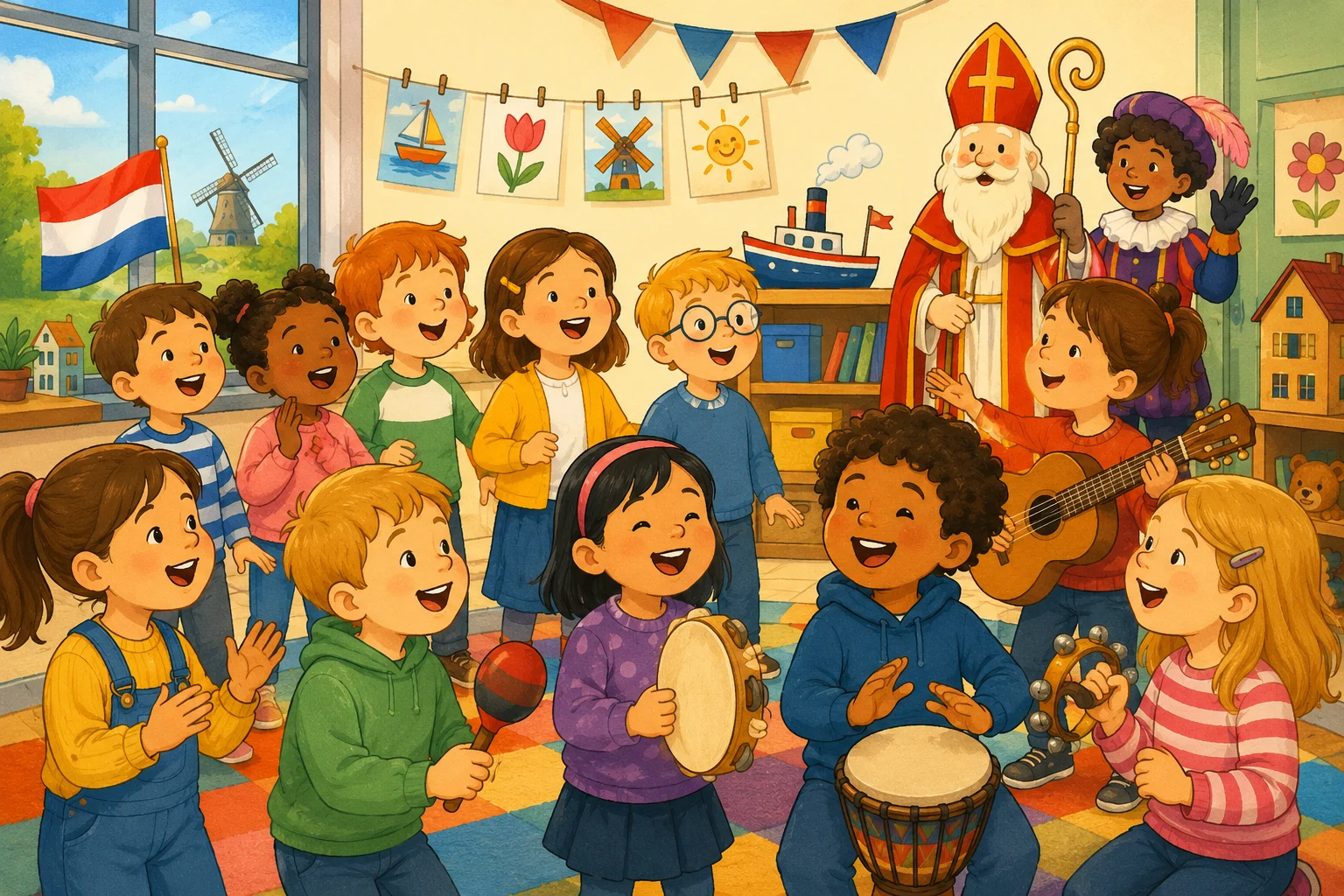
Reading Time: 5 minutesMoving to the Netherlands as an expat family comes with many surprises, especially for children starting at a Dutch school. One of the most memorable parts of Dutch primary school culture is music. From cheerful singalongs during class to festive songs for holidays and birthdays, Dutch children grow up with a soundtrack that becomes deeply familiar over time.
For expat children, learning these songs is more than just fun. It helps them feel included, improves their Dutch language skills, and connects them with classmates. Whether your child is attending an international school with Dutch activities or a local basisschool, these are the top Dutch songs they are almost guaranteed to hear.
Table of Contents
Waarom Waarom Waarom
“Waarom Waarom Waarom” is one of those classic Dutch children’s songs that seems to appear everywhere. Teachers use it in early primary school because it is repetitive, catchy, and easy to learn.
The song encourages curiosity by repeatedly asking “why,” making it ideal for younger children who are naturally full of questions. Expat children often pick up the chorus quickly, even if they do not yet understand every word.
Parents are often surprised when their children suddenly start singing Dutch phrases at home after only a few weeks at school.
Lang Zal Ze Leven
Birthday celebrations in Dutch schools are a major tradition, and “Lang Zal Ze Leven” is the official soundtrack. Every time a child has a birthday, classmates gather around to sing this festive song before handing out treats.
Unlike in some countries where birthdays are celebrated quietly, Dutch schools make them a big communal moment. Expat children quickly learn that singing loudly and enthusiastically is part of the experience.
This song is especially important because birthdays happen all year long, meaning children hear it constantly.
Zie Ginds Komt De Stoomboot
During the Sinterklaas season, schools across the Netherlands transform into festive spaces filled with songs, decorations, and excitement. “Zie Ginds Komt De Stoomboot” is one of the most iconic Sinterklaas songs.
Even expat families unfamiliar with Dutch traditions will hear this tune repeatedly from November through early December. The song tells the story of Sinterklaas arriving by steamboat from Spain.
For children, learning Sinterklaas songs is often one of the first ways they feel part of Dutch culture.
Hoofd, Schouders, Knie en Teen
This Dutch version of “Head, Shoulders, Knees and Toes” is extremely common in kindergarten and lower primary classes. Teachers use it to help children learn body parts while combining movement with language learning.
Because the melody is already familiar to many international children, it becomes an easy bridge into Dutch vocabulary.
Songs with actions are particularly helpful for expat children because they reduce the pressure of understanding every word immediately.
Ik Zag Twee Beren Broodjes Smeren
Few Dutch children’s songs are as universally recognized as “Ik Zag Twee Beren Broodjes Smeren.” The playful lyrics about two bears making sandwiches sound delightfully silly to children, which explains why the song has remained popular for generations.
Teachers often use this song during music time or casual classroom moments. Expat children tend to love it because of the humorous imagery and repetitive structure.
It is also one of the songs parents are most likely to hear repeatedly at home afterward.
In Holland Staat Een Huis
This simple educational song helps children learn vocabulary related to homes, families, and daily life. Its repetitive rhythm makes it easy for non-native speakers to follow along.
Dutch schools often use songs like this to reinforce language learning in a natural way. For expat children, these repetitive classroom songs can dramatically speed up listening comprehension.
Over time, children start recognizing sentence structures and pronunciation patterns through music before they fully understand grammar lessons.
Dikkertje Dap
“Dikkertje Dap” is based on a beloved Dutch children’s poem by Annie M.G. Schmidt, one of the most famous names in Dutch children’s literature.
The song tells the charming story of a boy visiting a giraffe at the zoo. Many schools introduce it during reading or music lessons because it combines storytelling with rhythm.
For expat families, this song offers a glimpse into classic Dutch culture and literature.
Olaf Liedjes and Modern Dutch Kids Music
Today’s Dutch children also grow up with modern educational songs from YouTube channels and school media platforms. Many classrooms play contemporary singalong tracks that teach counting, colors, or social skills.
Popular Dutch children’s entertainment channels often become part of an expat child’s daily routine surprisingly quickly. Even children who initially resist Dutch-language media often begin singing along after hearing these songs repeatedly at school.
This exposure can significantly improve pronunciation and listening skills.
Seasonal Songs Are a Big Deal in Dutch Schools
One thing many expat parents notice is how seasonal Dutch school music can be. Schools regularly switch songs depending on the time of year.
Children may sing:
- Sinterklaas songs in autumn
- Christmas songs in December
- Spring songs around Easter
- Summer holiday songs before vacation begins
Because music is tied closely to celebrations and classroom traditions, expat children absorb Dutch culture naturally through repetition and participation.
Why Dutch School Songs Matter for Expat Children
Dutch children’s songs are not just entertainment. They serve several important purposes for expat children adapting to a new environment.
Songs help children:
- Build confidence in speaking Dutch
- Feel included in classroom culture
- Improve pronunciation naturally
- Learn vocabulary through repetition
- Participate in school traditions
Many expat parents discover that music becomes one of the fastest ways their children integrate socially.
Even shy children often feel more comfortable singing along with classmates than speaking Dutch in conversation at first.
Tips for Parents Supporting Dutch Language Learning Through Music
Parents do not need to speak fluent Dutch to help their children engage with these songs.
Helpful strategies include:
- Playing Dutch children’s music at home
- Watching Dutch singalong videos together
- Asking children to explain songs they learned at school
- Singing along during car rides
- Creating a playlist of school favorites
The more exposure children have to Dutch sounds and rhythms, the faster they tend to adapt linguistically.
Conclusion
Dutch school songs are a core part of childhood in the Netherlands. For expat children, they provide an enjoyable and low-pressure way to connect with classmates, learn the language, and understand local traditions.
From birthday classics like “Lang Zal Ze Leven” to festive Sinterklaas songs and silly favorites like “Ik Zag Twee Beren Broodjes Smeren,” these tunes quickly become part of daily life.
Parents may not understand every lyric at first, but before long, they will probably find themselves humming along too.

Teacher Dave
Teacher Dave is an enthusiastic and dedicated educator behind OnlineDutch4Kids, a platform designed to help expat children aged 5 to 12 learn Dutch in a fun and accessible way. With a strong passion for language learning and child development, he focuses on creating engaging, interactive lessons that make Dutch approachable for young learners who may be new to the language. Through Free Dutch Online, Teacher Dave combines storytelling, games, songs, and visual materials to keep children motivated and curious. His teaching style is patient, encouraging, and tailored to the needs of international families, helping kids build confidence in speaking, listening, reading, and writing Dutch at their own pace. By blending education with creativity, Teacher Dave has built a supportive online learning environment where children from around the world can connect with the Dutch language in an enjoyable and meaningful way.