
- by Teacher Dave
Why Dutch Sounds So Funny to Kids (and How to Master the Pronunciation)
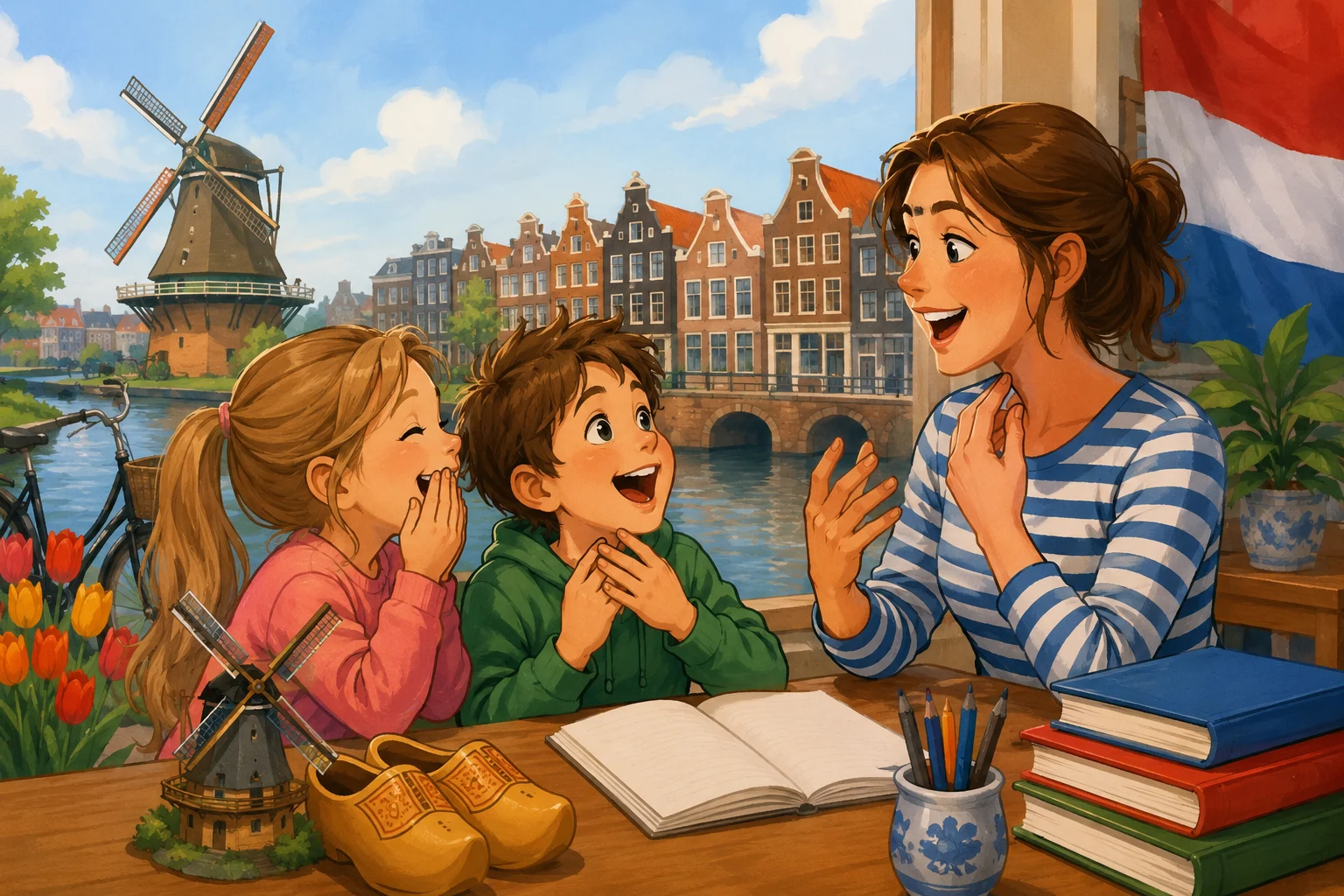
Reading Time: 5 minutesIf you’ve ever heard a child burst into laughter after listening to someone speak Dutch, you’re not alone. The Dutch language has a unique rhythm, unusual throat sounds, and playful word combinations that can sound hilarious to young ears. But beneath the giggles lies one of Europe’s most expressive and fascinating languages.
For language learners, Dutch pronunciation can feel intimidating at first. The famous “g” sound, rolling vowels, and fast-speaking natives often make beginners wonder if they’ll ever sound natural. The good news? Dutch pronunciation is absolutely learnable once you understand why it sounds so different and how to train your ears and mouth correctly.
In this guide, you’ll discover why Dutch sounds funny to kids, what makes Dutch pronunciation unique, and the most effective ways to master speaking Dutch with confidence.
Table of Contents
Why Dutch Sounds Funny to Children
Children naturally notice sounds that differ from the languages they hear every day. Dutch contains several features that make it stand out immediately.
The Famous Dutch “G” Sound
One of the biggest reasons kids laugh at Dutch is the guttural “g” and “ch” sounds. These are produced deep in the throat and can sound harsh or exaggerated to non-native listeners.
Words like:
- “Goedemorgen” (good morning)
- “Gracht” (canal)
- “Scheveningen” (a famous Dutch place name)
often sound funny because the pronunciation resembles throat-clearing noises to unfamiliar ears.
Dutch Has a Bouncy Rhythm
Dutch speech has a sing-song rhythm that rises and falls quickly. Kids tend to mimic this exaggerated musical flow, especially when they hear excited native speakers talking fast.
Compared to English, Dutch often sounds more energetic and expressive, which adds to its comedic effect for children.
Long Compound Words
Dutch is famous for creating long combined words. To children, these giant words sound playful and almost made-up.
Examples include:
- “Ziekenhuisverzekering” (health insurance)
- “Kindercarnavalsoptochtvoorbereidingswerkzaamheden”
Even adults sometimes laugh at how long Dutch words can become.
Familiar Yet Strange
Dutch belongs to the same Germanic language family as English, so many words sound oddly familiar. Kids often recognize pieces of English-like sounds mixed with completely different pronunciation patterns.
This creates a funny “almost understandable” effect that makes Dutch entertaining for young listeners.
What Makes Dutch Pronunciation Difficult?
While Dutch is considered easier for English speakers than many other European languages, pronunciation remains one of the biggest challenges.
Unique Vowel Sounds
Dutch contains vowel sounds that don’t exist in English. Tiny differences in mouth shape can completely change a word’s meaning.
For example:
- “man” vs. “maan”
- “bot” vs. “boot”
Length and tone matter much more in Dutch than many beginners realize.
The Harsh Consonants
The Dutch “g,” “ch,” and sometimes “r” require mouth movements unfamiliar to English speakers. These sounds cannot be mastered through reading alone — they require listening and imitation.
Fast Native Speech
Native Dutch speakers often blend words together quickly. Beginners may understand textbook Dutch but struggle during real conversations.
For example:
- “Hoe gaat het met je?” may sound compressed into one flowing phrase.
This speed can make Dutch feel overwhelming initially.
How to Master Dutch Pronunciation
The secret to improving Dutch pronunciation is consistent listening and targeted practice. Here are the most effective strategies.
Train Your Ears Before Your Mouth
Many learners try to speak too early without first recognizing the sounds correctly.
Spend time listening to:
- Dutch podcasts
- Dutch YouTube channels
- Dutch TV shows
- Slow Dutch learning audio
Focus on identifying rhythm and sound patterns rather than translating every word.
Your brain must first become familiar with Dutch sound structures before your mouth can reproduce them naturally.
Practice the Dutch “G” Separately
The guttural “g” deserves dedicated practice.
Start by:
- Making a soft throat-clearing sound
- Keeping airflow steady
- Practicing slowly with simple words
Examples:
- goed
- graag
- zeggen
Many learners improve dramatically once they isolate this single sound.
Mimic Native Speakers
Shadowing is one of the fastest pronunciation-learning techniques.
Here’s how:
- Listen to one sentence
- Pause immediately
- Repeat it while copying tone, speed, and emotion
Do not focus only on words. Copy the melody and rhythm too.
This helps you sound natural much faster than traditional memorization.
Record Yourself Speaking
Most pronunciation mistakes become obvious once you hear yourself.
Use your phone to record short Dutch sentences and compare them to native audio.
Pay attention to:
- Vowel length
- Word stress
- Throat sounds
- Speech flow
Small adjustments repeated consistently lead to major improvements.
Learn Word Stress Patterns
Dutch word stress is usually predictable, but beginners often stress the wrong syllable.
Incorrect stress can make even correctly pronounced words difficult for natives to understand.
Practice stressing the natural syllables in words like:
- Nederland
- gezellig
- vakantie
Listening carefully to natives is the best way to internalize this naturally.
Don’t Fear Sounding Silly
Ironically, many learners improve faster once they stop worrying about sounding funny.
Dutch itself already sounds amusing to many outsiders — and native speakers know this. Most Dutch people appreciate foreigners who genuinely try to speak the language.
Confidence and consistency matter far more than perfection.
Best Tools for Improving Dutch Pronunciation
Several resources can accelerate your learning.
Language Apps
Apps with speech recognition help train pronunciation daily.
Popular choices include:
- Duolingo
- Babbel
- Memrise
Dutch YouTube Channels
Native-speaking creators help you hear authentic pronunciation in context.
Look for:
- Slow Dutch channels
- Dutch vlogs
- Dutch news clips
Podcasts for Learners
Listening repeatedly builds pronunciation instincts naturally.
Search for:
- DutchPod101
- Easy Dutch
- Learn Dutch podcasts
Speaking With Native Speakers
Nothing replaces real conversation.
Language exchange platforms and online tutors help correct mistakes quickly and improve confidence.
Why Dutch Pronunciation Is Worth Learning
Despite its funny reputation, Dutch pronunciation becomes surprisingly logical once you understand the sound system.
Unlike English, Dutch spelling is often more consistent. Once you learn the rules, many words become easier to pronounce correctly.
Mastering pronunciation also helps you:
- Understand native speakers faster
- Sound more confident
- Improve listening comprehension
- Connect more naturally with Dutch culture
And perhaps most importantly — you’ll finally understand why Dutch sounds so entertaining to children in the first place.
Conclusion
Dutch sounds funny to kids because of its throat-heavy consonants, musical rhythm, and unusual word constructions. To unfamiliar ears, the language can seem playful, dramatic, and even cartoon-like. But those same characteristics are what make Dutch unique and memorable.
For learners, mastering Dutch pronunciation takes patience, listening practice, and the willingness to imitate sounds that may initially feel strange. By training your ears, practicing consistently, and embracing the language’s quirks, you can develop clear and confident Dutch pronunciation much faster than you might expect.
What begins as laughter often turns into admiration once you realize how expressive and beautiful the Dutch language truly is.

Teacher Dave
Teacher Dave is an enthusiastic and dedicated educator behind OnlineDutch4Kids, a platform designed to help expat children aged 5 to 12 learn Dutch in a fun and accessible way. With a strong passion for language learning and child development, he focuses on creating engaging, interactive lessons that make Dutch approachable for young learners who may be new to the language. Through Free Dutch Online, Teacher Dave combines storytelling, games, songs, and visual materials to keep children motivated and curious. His teaching style is patient, encouraging, and tailored to the needs of international families, helping kids build confidence in speaking, listening, reading, and writing Dutch at their own pace. By blending education with creativity, Teacher Dave has built a supportive online learning environment where children from around the world can connect with the Dutch language in an enjoyable and meaningful way.