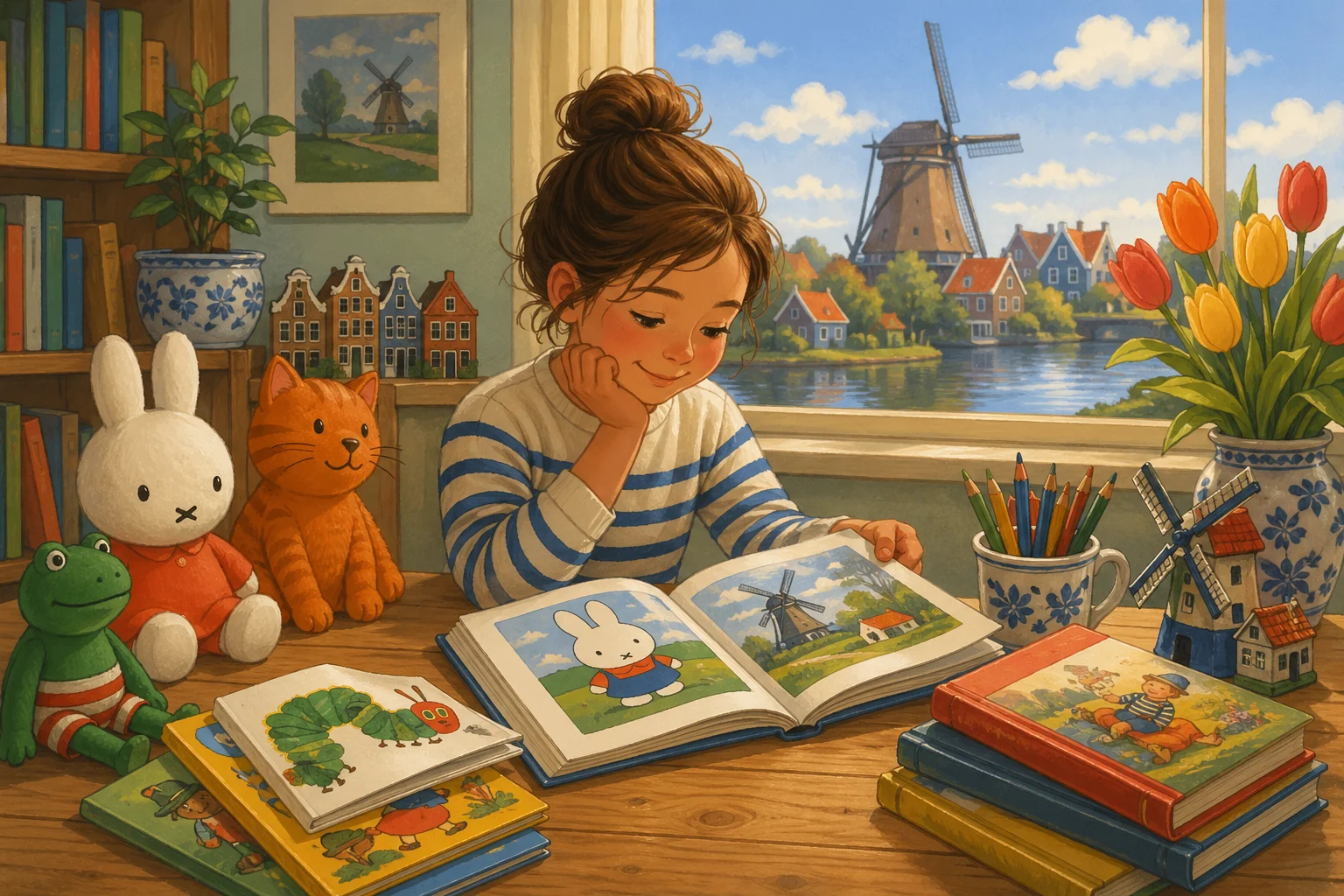
Learning Dutch can feel overwhelming at first, but using children’s books transforms the process into something enjoyable and effective. If you’re looking for a natural way to improve your Dutch vocabulary, pronunciation, and comprehension, learning Dutch through stories is one of the best methods available.
In this guide, you’ll discover the best Dutch children’s books for beginners and how to use them to accelerate your language learning.
Table of Contents
Why Learning Dutch Through Stories Works
Children’s books are specifically designed to teach language in a simple, engaging, and repetitive way. This makes them ideal for Dutch learners at beginner and intermediate levels.
They help you:
- Learn common Dutch words in context
- Understand sentence structure naturally
- Improve reading and pronunciation skills
- Build confidence without complex grammar rules
Because stories are memorable, you retain vocabulary much faster compared to traditional study methods.
Best Dutch Children’s Books for Beginners
Below are some of the most effective and popular Dutch children’s books that can help you learn the language step by step.
1. Jip en Janneke – Perfect for Absolute Beginners
Written by Annie M.G. Schmidt, Jip en Janneke is one of the most famous Dutch children’s book series.
The stories are:
- Short and easy to follow
- Written in simple Dutch
- Focused on everyday situations
This makes it one of the best starting points for learning Dutch through reading.
2. Nijntje – Learn Dutch with Simple Words
Created by Dick Bruna, Nijntje (known as Miffy) uses minimal text and clear illustrations.
It’s ideal if you:
- Are just starting to learn Dutch
- Want to build basic vocabulary
- Prefer visual learning
3. Dikkie Dik – Build Vocabulary Naturally
Jet Boeke brings everyday language to life through a playful orange cat.
These books introduce:
- Slightly longer sentences
- More varied vocabulary
- Familiar daily scenarios
4. Kikker en zijn vriendjes – Learn Emotional Vocabulary
Written by Max Velthuijs, this series helps learners understand emotions and relationships in Dutch.
You’ll learn words related to:
- Feelings
- Friendship
- Personal experiences
5. Pluk van de Petteflet – Step Into Intermediate Dutch
Another classic by Annie M.G. Schmidt, this book introduces longer sentences and richer vocabulary.
It’s perfect when you’re ready to:
- Move beyond beginner level
- Read longer Dutch texts
- Improve comprehension
6. De Gruffalo (Dutch Version) – Learn Through Familiar Stories
Written by Julia Donaldson, this book is great if you already know the story in another language.
This helps you:
- Recognize patterns in Dutch
- Compare translations
- Learn faster through familiarity
7. Rupsje Nooitgenoeg – Expand Everyday Vocabulary
Created by Eric Carle, this book teaches essential Dutch vocabulary like:
- Food
- Numbers
- Days of the week
8. Raad eens hoeveel ik van je hou – Learn Expressive Dutch
By Sam McBratney, this story introduces soft, emotional language that helps expand your expressive skills.
9. Boer Boris – Improve Pronunciation with Rhythm
Written by Ted van Lieshout, this series uses rhyme and rhythm to make Dutch easier to pronounce and remember.
10. Saskia en Jeroen – Transition to Intermediate Fluency
By Jaap ter Haar, this collection helps you:
- Understand dialogue
- Follow longer narratives
- Build reading confidence
How to Learn Dutch Faster with Children’s Books
To get the best results, use an active learning approach instead of just reading passively.
Try these strategies:
- Read aloud to improve pronunciation
- Highlight and review new vocabulary
- Re-read stories multiple times
- Listen to audiobooks while following the text
Consistency is key—just 15 minutes a day can significantly improve your Dutch.
Common Mistakes to Avoid When Learning Dutch
Many learners slow their progress by:
- Translating every word instead of understanding context
- Choosing books that are too difficult
- Not repeating material enough
Stick to simple books first and gradually increase the difficulty.
Conclusion: Start Learning Dutch the Fun Way
Learning Dutch through stories is one of the most enjoyable and effective ways to build your language skills. By starting with simple children’s books and gradually moving to more complex stories, you create a natural learning progression that feels effortless.
These 10 must-read Dutch children’s books will help you expand your vocabulary, improve comprehension, and gain confidence in real-life Dutch.
If you want faster results, make reading a daily habit—and let stories guide your journey to fluency.