Learning a new language can be exciting, especially when you discover colorful sayings that make conversations more fun. Dutch idioms are packed with humor, imagination, and cultural traditions. For kids learning Dutch, these expressions can sound strange at first because their meanings are often very different from the actual words.
In this guide, we’ll explore some of the funniest Dutch idioms for kids and explain what they really mean. Understanding these expressions can help children improve their language skills, connect with Dutch culture, and enjoy learning in a playful way.
Table of Contents
What Are Dutch Idioms?
An idiom is a phrase whose meaning cannot be understood simply by looking at the individual words. For example, if someone says it’s “raining cats and dogs” in English, they don’t mean animals are falling from the sky. They mean it’s raining very heavily.
Dutch has many idioms that work the same way. These expressions are commonly used in everyday conversations, making them valuable for children who want to speak Dutch more naturally.
Waarom Hebben We Een Aap Op Onze Schouder?
Dutch Idiom: “Er zit een aap op je schouder.”
Literal Translation: “There is a monkey on your shoulder.”
Real Meaning: You have a problem or responsibility that needs attention.
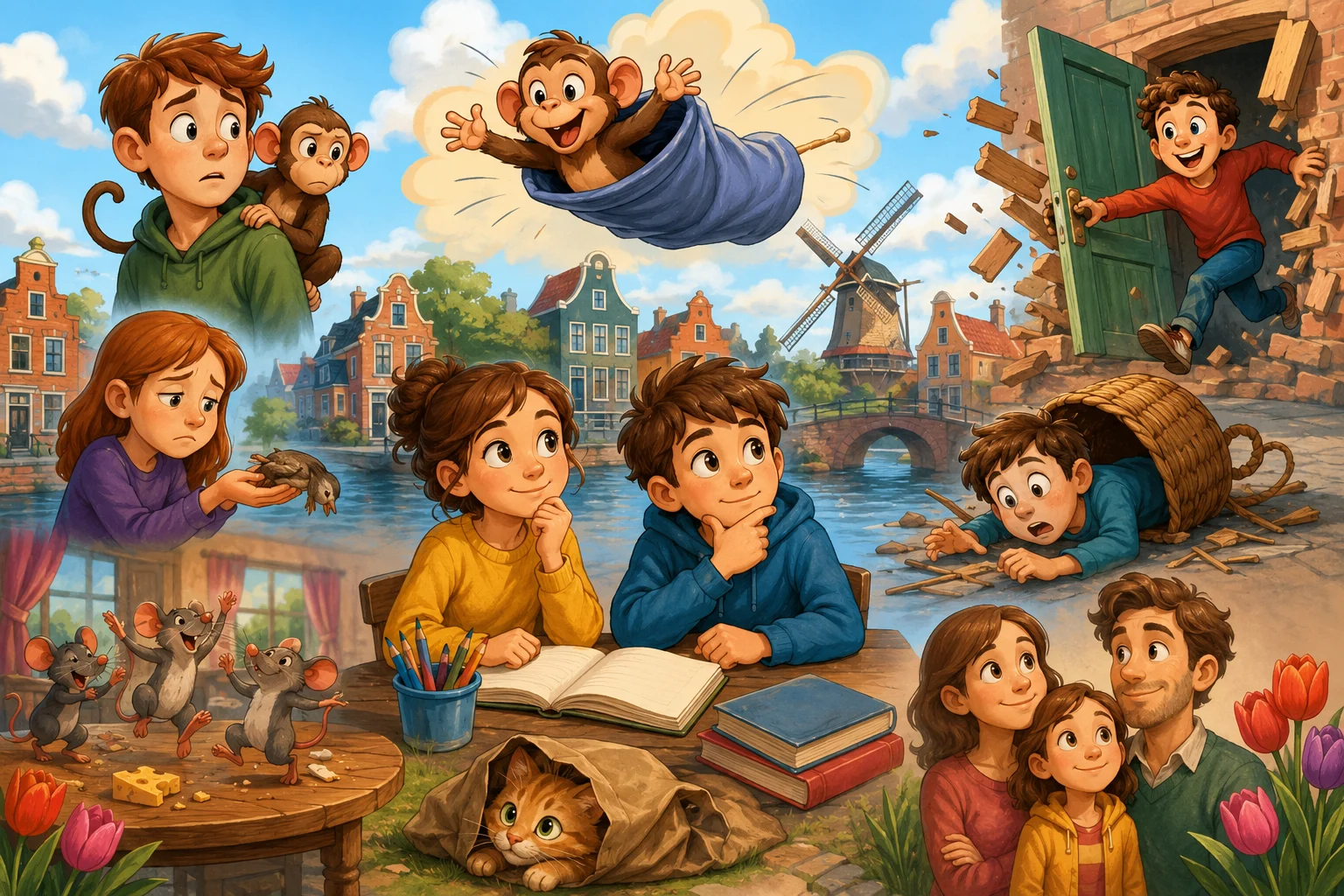
Kids might imagine a real monkey sitting on someone’s shoulder, but this phrase actually refers to a burden or concern that someone is carrying around.
Example:
“If you forget your homework, you have a monkey on your shoulder until you finish it.”
Nu Komt De Aap Uit De Mouw
Dutch Idiom: “Nu komt de aap uit de mouw.”
Literal Translation: “Now the monkey comes out of the sleeve.”
Real Meaning: The truth is finally revealed.
This funny expression creates a silly image of a monkey hiding inside a shirt sleeve. In reality, it means someone’s true intentions or a hidden secret has become known.
Example:
“When Tom admitted he ate the cookies, the monkey came out of the sleeve.”
Met De Deur In Huis Vallen
Dutch Idiom: “Met de deur in huis vallen.”
Literal Translation: “To fall into the house with the door.”
Real Meaning: To get straight to the point without any introduction.
Children often find this expression hilarious because it sounds physically impossible. It simply means skipping small talk and immediately discussing the main topic.
Example:
“Instead of saying hello first, she fell into the house with the door and asked for help.”
Iemand Blij Maken Met Een Dode Mus
Dutch Idiom: “Iemand blij maken met een dode mus.”
Literal Translation: “To make someone happy with a dead sparrow.”
Real Meaning: To disappoint someone after giving them false hope.
This unusual phrase teaches kids that promises should be realistic and honest.
Example:
“He thought he won a prize, but it turned out to be nothing special. He was made happy with a dead sparrow.”
Als De Kat Van Huis Is, Dansen De Muizen Op Tafel
Dutch Idiom: “Als de kat van huis is, dansen de muizen op tafel.”
Literal Translation: “When the cat is away, the mice dance on the table.”
Real Meaning: People behave differently when the person in charge is not around.
This is one of the easiest Dutch idioms for children to understand because the image is both funny and memorable.
Example:
“When the teacher left the classroom, the mice danced on the table.”
Door De Mand Vallen
Dutch Idiom: “Door de mand vallen.”
Literal Translation: “To fall through the basket.”
Real Meaning: To get caught doing something wrong or to be exposed.
Kids often encounter situations where someone tries to hide a mistake but eventually gets discovered.
Example:
“He tried to blame his sister, but he fell through the basket when the truth came out.”
De Appel Valt Niet Ver Van De Boom
Dutch Idiom: “De appel valt niet ver van de boom.”
Literal Translation: “The apple doesn’t fall far from the tree.”
Real Meaning: Children often resemble their parents in behavior, talents, or appearance.
This expression is common in many cultures and helps children understand family similarities.
Example:
“Emma loves painting just like her mother. The apple doesn’t fall far from the tree.”
Een Kat In De Zak Kopen
Dutch Idiom: “Een kat in de zak kopen.”
Literal Translation: “To buy a cat in a bag.”
Real Meaning: To buy something without checking it first and later discover it’s not good.
This idiom teaches an important lesson about making smart decisions.
Example:
“He bought the toy online without reading reviews and ended up buying a cat in a bag.”
Waarom Zijn Idioms Leuk Voor Kinderen?
Idioms make language more colorful and engaging. They encourage children to think creatively because the literal meaning is often very different from the actual message. Learning idioms can also:
- Improve vocabulary skills
- Help children understand native speakers
- Make reading and storytelling more enjoyable
- Introduce cultural traditions and humor
- Boost confidence in language learning
Because many Dutch idioms involve animals, food, or funny situations, children often remember them more easily than standard vocabulary.
Tips for Teaching Dutch Idioms to Kids
When introducing idioms to children, it helps to make the learning process interactive.
- Use illustrations to show the literal meaning.
- Act out the expressions through role-playing.
- Create matching games with idioms and meanings.
- Read Dutch storybooks that include common expressions.
- Encourage children to use one new idiom each day.
Making idioms part of everyday conversation helps kids understand when and how to use them naturally.
Conclusion
Dutch idioms for kids are a fun and effective way to explore the Dutch language. From monkeys hiding in sleeves to mice dancing on tables, these expressions create memorable images that capture children’s imagination. While the literal translations may sound funny, the real meanings offer valuable lessons about communication, honesty, responsibility, and everyday life. By learning common Dutch idioms, children can better understand native speakers, enrich their vocabulary, and develop a deeper appreciation for Dutch culture. The next time they hear a strange expression, they’ll know there is often a clever meaning hidden behind the words.