
- by Teacher Dave
How Sports Help Expat Kids Learn Dutch Faster
Reading Time: 4 minutesMoving to a new country can be exciting for children, but it also comes with challenges. For expat families living in the Netherlands, one of the biggest hurdles is learning Dutch. While classroom lessons are important, many parents overlook one of the most effective ways for children to pick up a new language naturally: sports.
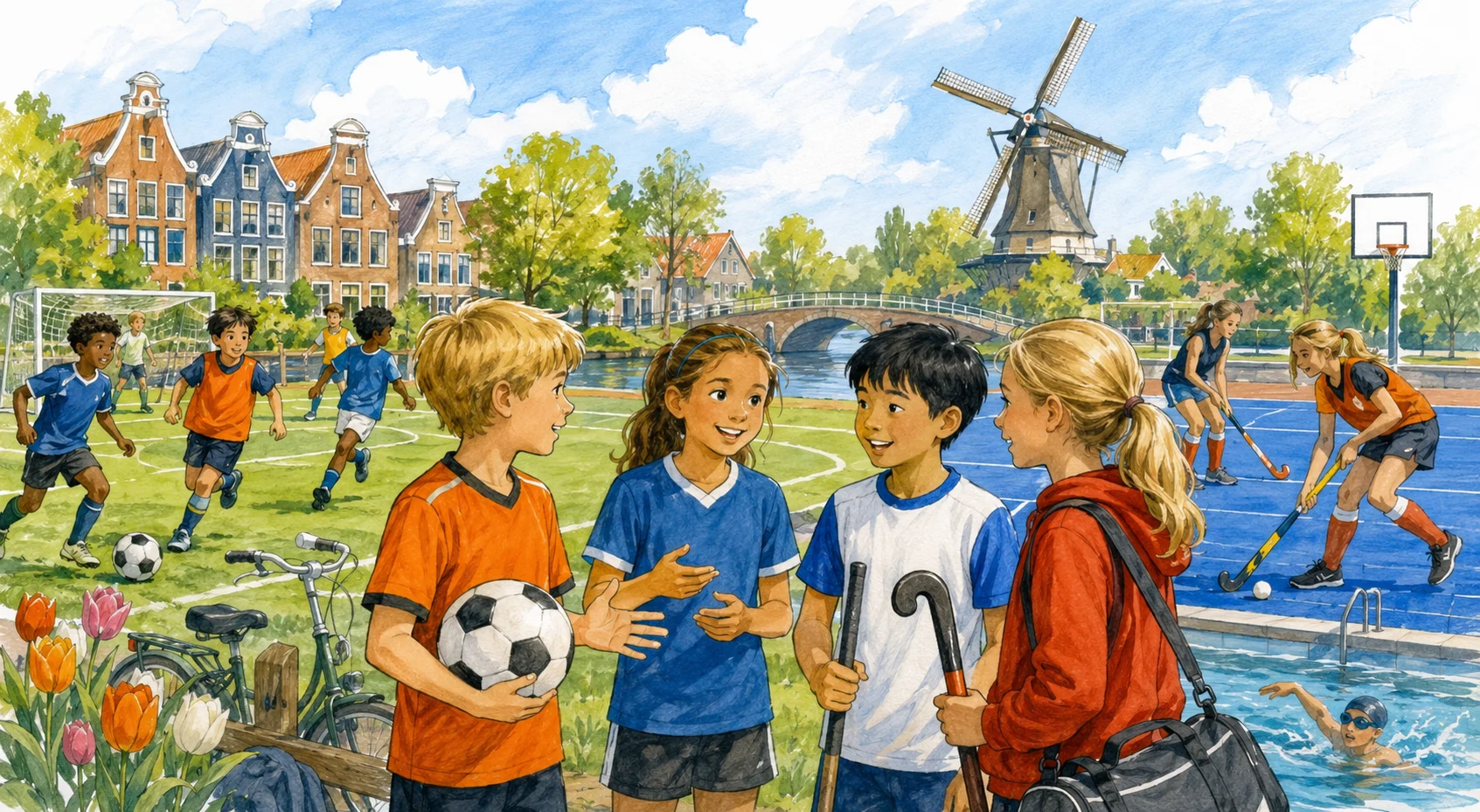
From football and hockey to swimming and gymnastics, sports give expat children the chance to immerse themselves in Dutch culture, build friendships, and improve their language skills in real-life situations. Here’s why sports can dramatically speed up the process of learning Dutch for expat kids.
Table of Contents
Sports Create Natural Language Immersion
Children learn languages faster when they hear and use them in everyday situations. Sports clubs in the Netherlands are highly social environments where Dutch is constantly spoken by coaches, teammates, and parents.
During practice sessions, kids hear common Dutch phrases repeatedly:
- Instructions from coaches
- Team discussions
- Encouragement from teammates
- Casual conversations before and after games
This type of immersion feels natural instead of forced. Rather than memorizing vocabulary from a textbook, children connect words to actions and emotions, which improves retention and understanding.
Team Sports Build Confidence in Speaking Dutch
Many expat children feel nervous speaking Dutch at school because they fear making mistakes. Sports can reduce that pressure.
On the field or court, communication is simple and goal-oriented. Kids quickly learn practical phrases like:
- “Pass the ball!”
- “Good job!”
- “Are you coming to practice?”
- “See you next week!”
Because the focus is on playing rather than speaking perfectly, children become more comfortable using Dutch without overthinking grammar or pronunciation.
As confidence grows in sports settings, it often transfers into school and daily life.
Friendships Encourage Faster Language Learning
One of the strongest motivators for learning a language is friendship. Sports help expat children connect with Dutch-speaking peers outside the classroom.
When kids want to communicate with teammates, they naturally push themselves to learn more Dutch. Conversations during training, competitions, birthday parties, and team events create repeated opportunities to practice.
These friendships also help children feel less isolated after moving to a new country. Feeling socially included can improve emotional well-being and make the entire adaptation process smoother.
Dutch Sports Culture Encourages Inclusion
The Netherlands has a strong sports culture, and many local clubs are welcoming to international families. Coaches are often supportive of children who are still learning the language.
Many Dutch sports clubs focus on teamwork, participation, and community rather than only competition. This creates an environment where expat children feel accepted even if their Dutch is still developing.
For younger children especially, sports provide an easy entry point into Dutch society without the pressure of formal academics.
Physical Activity Improves Brain Function and Learning
Research consistently shows that physical activity supports cognitive development and learning. Exercise improves concentration, memory, and mental flexibility — all of which are essential for language acquisition.
When children participate in sports regularly, they are often better able to absorb new vocabulary, process grammar patterns, and stay engaged in school.
Sports also reduce stress and anxiety, which can otherwise slow down language learning for children adjusting to a new environment.
Sports Teach Everyday Dutch Vocabulary
Sports expose children to practical vocabulary they may not immediately learn in school. They hear words related to:
- Directions
- Numbers and counting
- Emotions
- Teamwork
- Time and schedules
- Social interaction
Because these words are tied to actions and repetition, they are easier to remember. Over time, children begin understanding not just sports-related Dutch but conversational Dutch as well.
Popular Sports for Expat Kids in the Netherlands
The Netherlands offers a wide variety of sports programs for children. Some of the most popular options include:
- Football (soccer)
- Field hockey
- Tennis
- Swimming
- Basketball
- Martial arts
- Cycling clubs
- Gymnastics
Football and hockey are especially effective for language immersion because they involve constant teamwork and communication.
Parents should choose activities based on their child’s interests, since enjoyment increases motivation and participation.
Tips for Parents Supporting Dutch Learning Through Sports
Parents can maximize the language-learning benefits of sports by taking a few simple steps:
Encourage Regular Participation
Consistency matters. Attending weekly practices and games gives children ongoing exposure to Dutch conversations.
Avoid Translating Everything
Allow children to figure out words from context whenever possible. This strengthens listening skills and confidence.
Engage With Other Parents
Connecting with Dutch parents can create additional social opportunities for both children and adults.
Choose Local Clubs Instead of International Groups
While international clubs may feel comfortable initially, local Dutch clubs usually provide stronger language immersion.
Celebrate Progress
Even small improvements in speaking or understanding Dutch deserve encouragement.
Why Sports Are More Effective Than Passive Learning
Apps, videos, and language classes are useful tools, but active participation accelerates learning far more effectively than passive study alone.
Sports combine:
- Repetition
- Social interaction
- Emotional engagement
- Physical movement
- Real-world communication
This combination helps children absorb Dutch naturally, much like they learned their first language.
Conclusion
Sports are one of the most powerful tools for helping expat children learn Dutch faster. Through teamwork, friendships, and daily interaction, kids gain practical language experience in a fun and low-pressure environment.
Beyond language skills, sports also help children feel connected, confident, and at home in the Netherlands. For expat families looking to support both social integration and Dutch language development, joining a local sports club can make a lasting difference.

Teacher Dave
Teacher Dave is an enthusiastic and dedicated educator behind OnlineDutch4Kids, a platform designed to help expat children aged 5 to 12 learn Dutch in a fun and accessible way. With a strong passion for language learning and child development, he focuses on creating engaging, interactive lessons that make Dutch approachable for young learners who may be new to the language. Through Free Dutch Online, Teacher Dave combines storytelling, games, songs, and visual materials to keep children motivated and curious. His teaching style is patient, encouraging, and tailored to the needs of international families, helping kids build confidence in speaking, listening, reading, and writing Dutch at their own pace. By blending education with creativity, Teacher Dave has built a supportive online learning environment where children from around the world can connect with the Dutch language in an enjoyable and meaningful way.