
- by Teacher Dave
Snack Time in Dutch: Food Words Kids Learn First
Reading Time: 3 minutesLearning a new language starts with the words children hear every single day. In Dutch, snack time is one of the easiest and most fun moments for kids to build vocabulary naturally. From fruit and crackers to drinks and sweets, food words are often among the very first Dutch words children remember and use confidently.
Whether your child is learning Dutch at home, in school, or through play, snack-related vocabulary creates a strong foundation for early language development. These words are practical, repetitive, and connected to daily routines, making them easier to learn and retain.
Table of Contents
Why Food Words Are Easy for Kids to Learn
Children learn best through repetition and real-life experiences. Snack time happens every day, which gives parents and teachers many opportunities to repeat Dutch vocabulary naturally.
Simple Dutch food words are often short, easy to pronounce, and tied directly to objects children can see and touch. This combination helps young learners quickly associate meaning with language.
For example:
- “appel” means apple
- “banaan” means banana
- “brood” means bread
- “melk” means milk
Because children interact with these foods regularly, they begin understanding and speaking the words much faster than abstract vocabulary.
Common Dutch Snack Words for Beginners
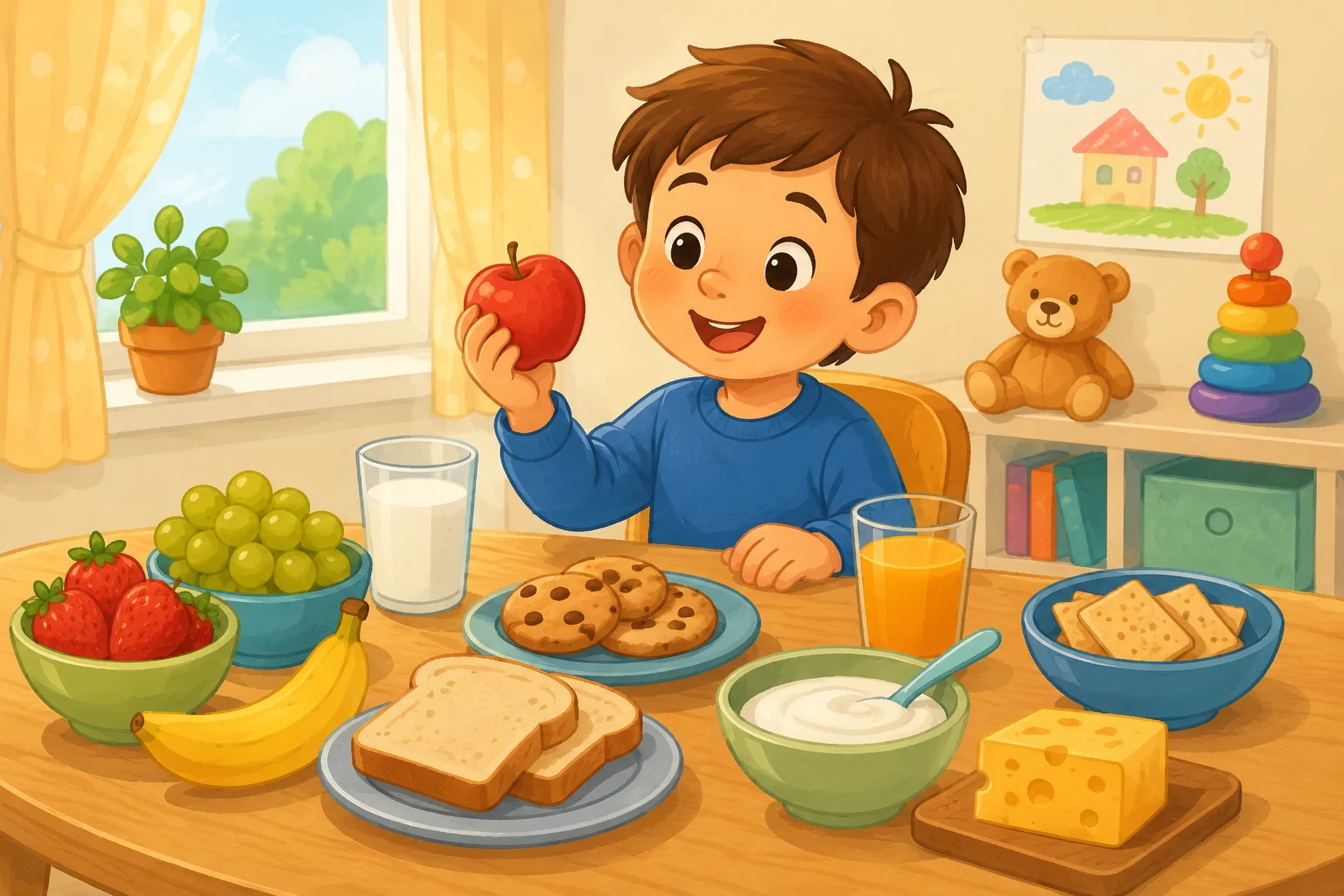
Here are some of the most common Dutch snack and food words kids usually learn first:
Fruit Words in Dutch
- appel — apple
- banaan — banana
- druiven — grapes
- aardbei — strawberry
- peer — pear
Fruit vocabulary is often introduced early because children already recognize these foods visually.
Dutch Words for Drinks
- water — water
- melk — milk
- sap — juice
Drink words are repeated throughout the day, making them ideal beginner vocabulary.
Popular Snack Foods
- koekje — cookie
- kaas — cheese
- brood — bread
- cracker — cracker
- yoghurt — yogurt
These everyday foods are easy for children to request during meals and snack breaks.
How Kids Learn Dutch Faster Through Food
Food vocabulary supports natural language immersion. Instead of memorizing flashcards, children hear and use words during meaningful activities.
Parents and teachers can encourage learning by:
- Naming foods during meals
- Asking simple questions in Dutch
- Singing food-themed songs
- Reading picture books about eating
- Playing pretend kitchen games
For example, asking “Wil je melk?” (“Do you want milk?”) teaches both vocabulary and sentence structure at the same time.
Fun Dutch Snack Phrases for Children
Once children know individual food words, they can start forming short phrases.
Helpful beginner phrases include:
- “Ik wil een appel.” — I want an apple.
- “Meer sap, alsjeblieft.” — More juice, please.
- “Dit is lekker!” — This is tasty!
- “Mag ik een koekje?” — May I have a cookie?
These practical expressions build speaking confidence quickly because kids can use them immediately in daily life.
Best Ways to Teach Dutch Food Vocabulary
The most effective language learning methods for children are interactive and playful.
Use Visual Learning
Show real snacks or colorful pictures while saying the Dutch word aloud. Visual connections improve memory retention.
Repeat Words Naturally
Children need to hear words many times before they remember them. Repeat food vocabulary consistently during meals and grocery shopping.
Turn Snack Time Into Learning Time
Snack time creates a relaxed environment where children feel comfortable practicing language without pressure.
Encourage Speaking
Even if pronunciation is not perfect, encouraging children to say Dutch food words builds confidence and fluency over time.
Why Snack Vocabulary Builds Language Confidence
Food words are practical, emotional, and connected to comfort. When children successfully use Dutch words to ask for snacks or drinks, they immediately experience successful communication.
That positive reinforcement motivates them to keep learning more Dutch vocabulary and phrases.
Because snack time happens multiple times a day, children receive constant exposure to useful language in a low-stress setting.
Conclusion
Snack time is one of the best opportunities for children to learn Dutch naturally. Simple food words like “appel,” “melk,” and “koekje” become part of daily routines, helping kids absorb vocabulary quickly through repetition and interaction.
By introducing Dutch snack vocabulary during meals, playtime, and conversations, parents and teachers can create a fun and effective language-learning environment. Small everyday moments often lead to the biggest language breakthroughs, and snack time is the perfect place to start.

Teacher Dave
Teacher Dave is an enthusiastic and dedicated educator behind OnlineDutch4Kids, a platform designed to help expat children aged 5 to 12 learn Dutch in a fun and accessible way. With a strong passion for language learning and child development, he focuses on creating engaging, interactive lessons that make Dutch approachable for young learners who may be new to the language. Through Free Dutch Online, Teacher Dave combines storytelling, games, songs, and visual materials to keep children motivated and curious. His teaching style is patient, encouraging, and tailored to the needs of international families, helping kids build confidence in speaking, listening, reading, and writing Dutch at their own pace. By blending education with creativity, Teacher Dave has built a supportive online learning environment where children from around the world can connect with the Dutch language in an enjoyable and meaningful way.