
- by Teacher Dave
From ‘Hallo’ to Full Sentences: Milestones in Learning Dutch for Kids
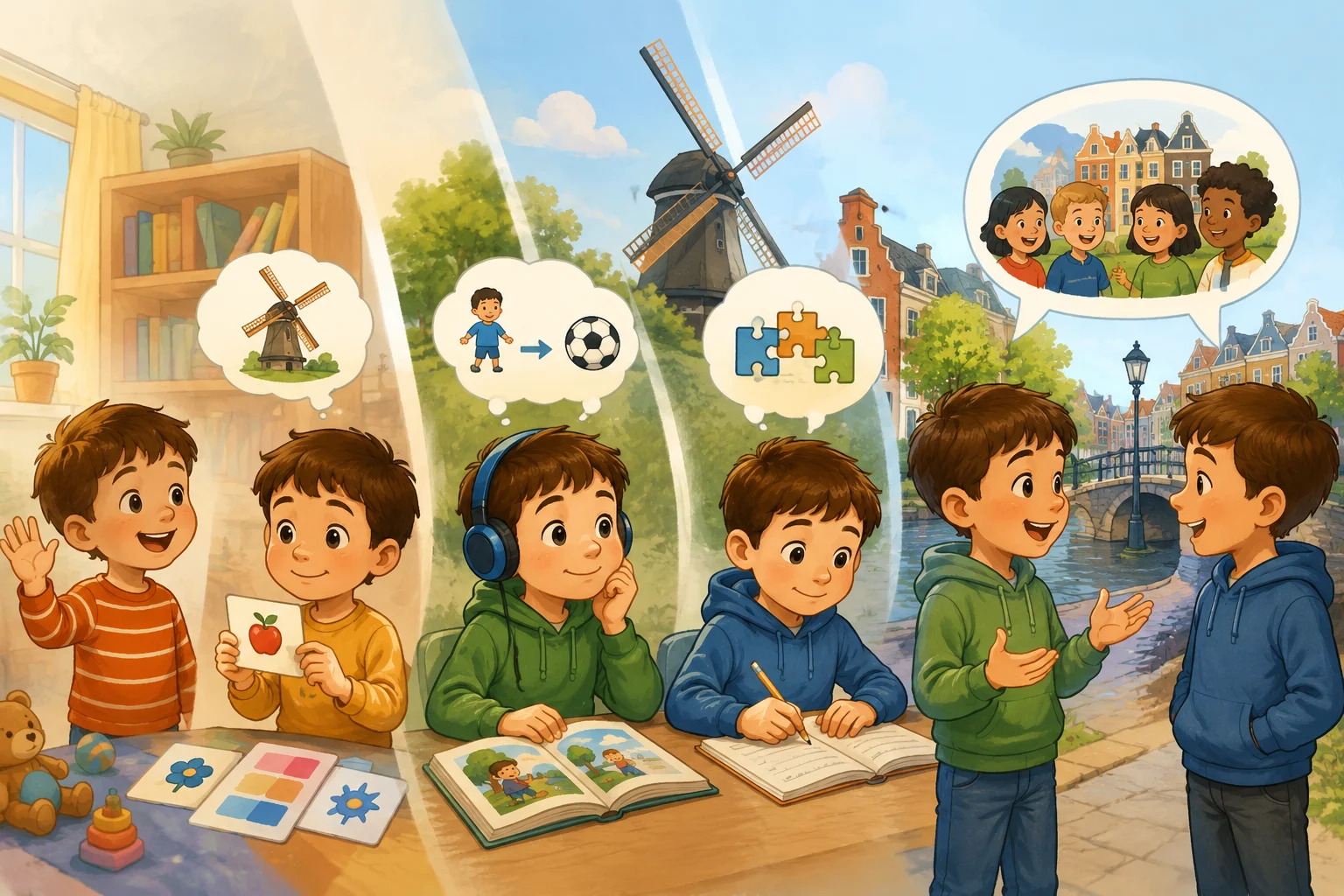
Reading Time: 5 minutesLearning a new language as a child is an exciting journey filled with small victories and memorable moments. For children learning Dutch, every new word, phrase, and sentence represents a meaningful step toward confidence and communication. From saying a simple “Hallo” to forming complete conversations, kids naturally progress through important language milestones that shape their fluency and understanding.
Parents often wonder what to expect during this process and how they can support their child’s Dutch language development. Understanding these milestones can help families celebrate progress while creating a positive and encouraging learning environment.
Table of Contents
Why Learning Dutch Early Matters
Children have a remarkable ability to absorb languages at a young age. Early exposure to Dutch helps kids develop pronunciation, listening skills, and vocabulary more naturally than adults. Learning Dutch can also improve cognitive flexibility, cultural understanding, and confidence in social situations.
For families living in or connected to the Netherlands, learning Dutch supports smoother integration into schools, communities, and everyday life. Even for international families, bilingualism offers long-term academic and social advantages.
The First Milestone: Recognizing Common Dutch Words
The first stage of language learning usually begins with recognition. Children start understanding basic Dutch words before they can confidently speak them aloud.
Some of the earliest words kids often learn include:
- Hallo (Hello)
- Dank je (Thank you)
- Ja (Yes)
- Nee (No)
- Mama and Papa
- Numbers and colors
At this stage, children may respond physically instead of verbally. For example, they may point to objects when hearing Dutch words or follow simple instructions such as “Kom hier” (Come here).
This silent period is completely normal and essential for language absorption.
Building Vocabulary Through Play
Young children learn best through interaction and repetition. Songs, games, cartoons, and storybooks play a huge role in helping them build Dutch vocabulary naturally.
Activities that support vocabulary growth include:
- Singing Dutch nursery rhymes
- Watching Dutch educational shows
- Playing naming games
- Reading illustrated Dutch books
- Using flashcards and visual aids
As vocabulary expands, children begin combining words into short phrases like:
- Ik wil water (I want water)
- Waar is mama? (Where is mom?)
- Nog een keer (One more time)
These small combinations are major indicators of progress.
Understanding Simple Dutch Sentences
The next milestone happens when children start understanding full sentences and responding appropriately. This stage demonstrates stronger listening comprehension and growing familiarity with grammar patterns.
Kids may begin to:
- Follow two-step instructions
- Answer basic questions
- Identify emotions and actions
- Understand classroom routines
For example, a child may understand:
- “Pak je schoenen” (Get your shoes)
- “We gaan naar school” (We are going to school)
Even if they cannot fully respond in Dutch yet, comprehension skills are developing rapidly behind the scenes.
Speaking in Short Dutch Sentences
Once children feel comfortable enough, they begin speaking in short but meaningful sentences. This is often the stage where parents notice visible progress.
Examples include:
- Ik ben moe (I am tired)
- Ik wil spelen (I want to play)
- Dit is mijn boek (This is my book)
At this point, children experiment with sentence structure, pronunciation, and verb usage. Mistakes are completely natural and should be encouraged as part of active learning.
Positive reinforcement helps children gain confidence and continue practicing without fear of being incorrect.
Expanding Grammar and Sentence Structure
As children grow more familiar with Dutch, they start using more advanced grammar concepts. Their sentences become longer, clearer, and more detailed.
They may begin using:
- Past tense verbs
- Descriptive adjectives
- Questions
- Connecting words
For example:
- Ik speelde buiten met mijn vrienden (I played outside with my friends)
- Waarom regent het vandaag? (Why is it raining today?)
This stage marks an important shift from memorized phrases to genuine language creation.
Developing Conversational Confidence
Eventually, children begin participating in real conversations. They can express opinions, tell stories, ask questions, and interact socially in Dutch.
Signs of conversational development include:
- Starting conversations independently
- Explaining experiences
- Using humor in Dutch
- Participating in classroom discussions
- Making friends using Dutch communication
Confidence becomes just as important as vocabulary. Children who feel encouraged and supported are more likely to practice regularly and improve faster.
Challenges Kids May Face While Learning Dutch
Every child learns at their own pace, and some challenges are completely normal during the process.
Common difficulties include:
- Mixing Dutch with another language
- Struggling with pronunciation
- Feeling shy about speaking
- Temporary language confusion
- Frustration with grammar rules
Parents should remember that bilingual development is not always linear. Some children progress quickly in speaking while others develop listening skills first.
Patience and consistent exposure are key to long-term success.
Tips for Supporting Dutch Language Learning at Home
Parents can make Dutch learning more enjoyable and effective with simple daily habits.
Helpful strategies include:
Speak Dutch Consistently
Even small amounts of daily Dutch conversation help reinforce vocabulary and pronunciation.
Create a Language-Rich Environment
Label household items, play Dutch music, and include Dutch books in your child’s routine.
Encourage Without Pressure
Celebrate effort instead of perfection. Children learn best when they feel relaxed and motivated.
Use Interactive Learning
Games, roleplay, storytelling, and hands-on activities make learning memorable and engaging.
Practice Real-Life Situations
Encourage children to order food, greet neighbors, or ask simple questions in Dutch whenever possible.
The Role of Schools and Social Interaction
Children often make the fastest progress when they hear Dutch in real social settings. Schools, playgrounds, and extracurricular activities expose them to natural conversation and everyday vocabulary.
Interaction with peers helps children:
- Improve pronunciation
- Learn slang and informal expressions
- Build confidence
- Develop listening skills
- Understand cultural context
Social immersion accelerates language development far beyond textbook learning alone.
When to Expect Full Fluency
Language fluency depends on several factors, including age, exposure, consistency, and personality. Some children become conversational within months, while full fluency may take several years.
The good news is that children are incredibly adaptable language learners. With regular exposure and encouragement, most kids steadily move from isolated words to complete and confident Dutch communication.
Conclusion
The journey from saying “Hallo” to speaking full Dutch sentences is filled with exciting milestones that reflect a child’s growing confidence and understanding. Every new word, phrase, and conversation represents meaningful progress in their language development.
By creating a supportive environment, encouraging consistent exposure, and celebrating small achievements, parents can help children enjoy the process of learning Dutch. Over time, these milestones build the foundation for fluency, cultural connection, and lifelong communication skills.
Learning Dutch is not just about mastering vocabulary or grammar — it is about helping children feel confident, connected, and capable in a new language and culture.

Teacher Dave
Teacher Dave is an enthusiastic and dedicated educator behind OnlineDutch4Kids, a platform designed to help expat children aged 5 to 12 learn Dutch in a fun and accessible way. With a strong passion for language learning and child development, he focuses on creating engaging, interactive lessons that make Dutch approachable for young learners who may be new to the language. Through Free Dutch Online, Teacher Dave combines storytelling, games, songs, and visual materials to keep children motivated and curious. His teaching style is patient, encouraging, and tailored to the needs of international families, helping kids build confidence in speaking, listening, reading, and writing Dutch at their own pace. By blending education with creativity, Teacher Dave has built a supportive online learning environment where children from around the world can connect with the Dutch language in an enjoyable and meaningful way.