
- by Teacher Dave
Fun Dutch Tongue Twisters for Kids (and Why They Work)
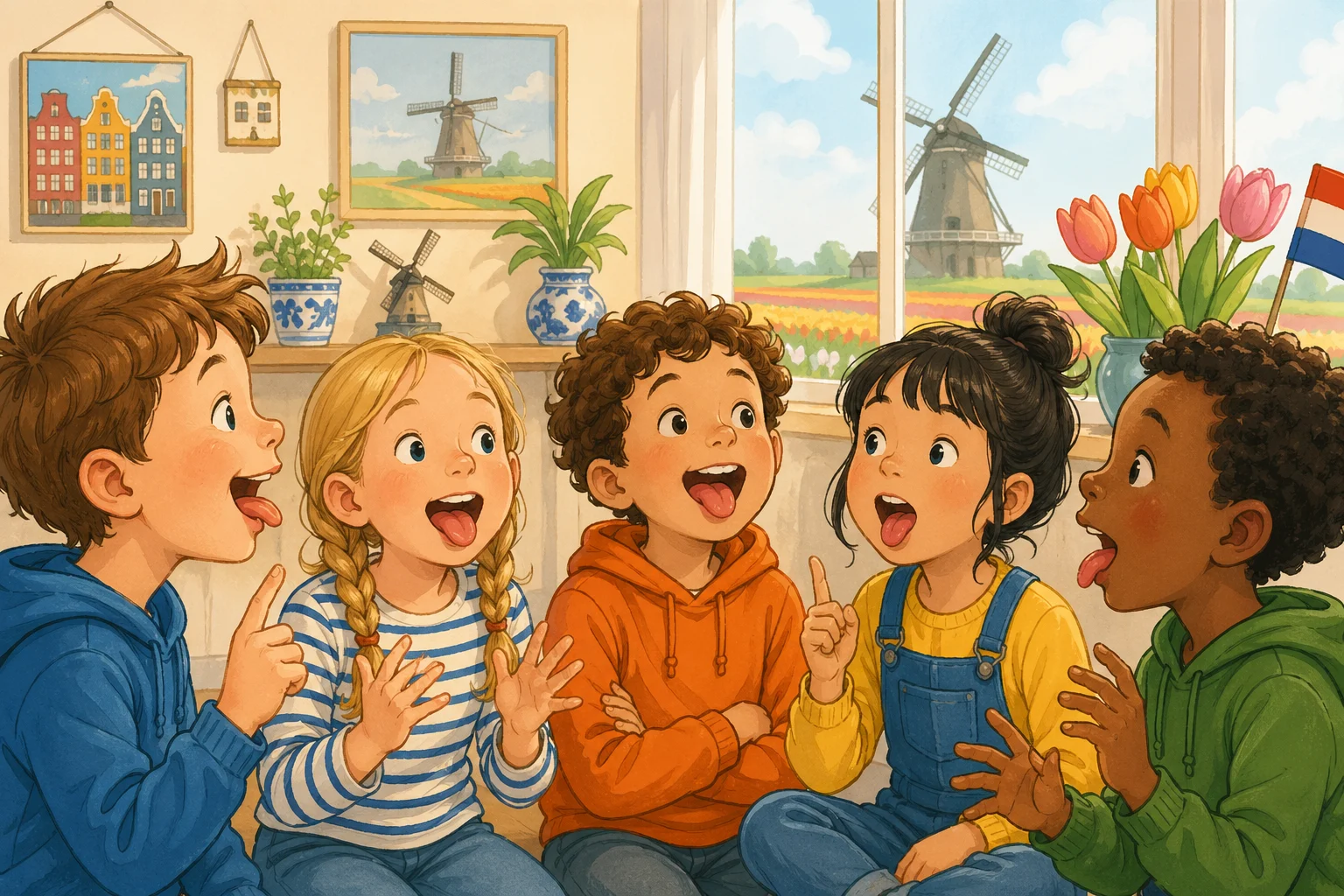
Reading Time: 2 minutesDutch tongue twisters are more than just silly sentences that make kids giggle—they’re powerful tools for language development, pronunciation, and confidence. Whether your child is learning Dutch as a first language or picking it up as a second, tongue twisters offer a playful and effective way to sharpen speech skills.
In this article, we’ll explore some fun Dutch tongue twisters for kids and explain why they’re so beneficial.
Table of Contents
What Are Tongue Twisters?
Tongue twisters are phrases designed to be tricky to say, especially when repeated quickly. They often use similar sounds, alliteration, or unusual word combinations that challenge the speaker’s articulation.
For kids, they turn language into a game—one that involves laughter, repetition, and a bit of friendly competition.
Fun Dutch Tongue Twisters for Kids
Here are some kid-friendly Dutch tongue twisters to try:
1. De kat krabt de krullen van de trap
(“The cat scratches the curls off the stairs”)
A classic! Great for practicing the “kr” sound.
2. Als vliegen achter vliegen vliegen, vliegen vliegen vliegensvlug
(“If flies fly behind flies, flies fly very fast”)
This one is fast, funny, and full of repetition.
3. Achtentachtig prachtige grachten
(“Eighty-eight beautiful canals”)
Perfect for practicing Dutch numbers and the “g” sound.
4. De postkoets koetsier poetst de postkoets met postkoetspoets
(“The stagecoach driver polishes the stagecoach with stagecoach polish”)
A bit longer, but great for older kids who want a challenge.
5. Scheve schaatsen schaatsen scheef
(“Crooked skates skate crookedly”)
Short, snappy, and tricky with the “sch” sound.
Encourage kids to start slowly, then speed up as they get more confident.
Why Tongue Twisters Work So Well
1. They Improve Pronunciation
Tongue twisters force kids to focus on specific sounds and how they’re formed. Dutch has some tricky consonants (like “g,” “sch,” and “r”), and repeating them in quick succession helps kids master them more naturally.
2. They Boost Confidence
When kids successfully say a difficult tongue twister, it gives them a sense of achievement. Even the mistakes are fun, which reduces the fear of speaking incorrectly.
3. They Strengthen Memory
Repeating tongue twisters helps improve short-term memory and recall. Kids often memorize them quickly because they’re rhythmic and amusing.
4. They Make Learning Fun
Let’s face it—kids learn best when they’re having fun. Tongue twisters turn language practice into a game rather than a chore.
5. They Enhance Listening Skills
Kids need to listen carefully to hear the differences between similar sounds. This sharpens their auditory processing and helps with overall language comprehension.
Tips for Practicing with Kids
- Start slow and clear before speeding up
- Turn it into a game or challenge
- Practice together and laugh at mistakes
- Use gestures or actions to make it more engaging
- Repeat regularly for best results
Conclusion
Dutch tongue twisters are a simple yet powerful way to help kids develop language skills while having fun. From improving pronunciation to building confidence, these playful phrases offer real educational value. By incorporating tongue twisters into daily routines, parents and teachers can turn language learning into an enjoyable and memorable experience.

Teacher Dave
Teacher Dave is an enthusiastic and dedicated educator behind OnlineDutch4Kids, a platform designed to help expat children aged 5 to 12 learn Dutch in a fun and accessible way. With a strong passion for language learning and child development, he focuses on creating engaging, interactive lessons that make Dutch approachable for young learners who may be new to the language. Through Free Dutch Online, Teacher Dave combines storytelling, games, songs, and visual materials to keep children motivated and curious. His teaching style is patient, encouraging, and tailored to the needs of international families, helping kids build confidence in speaking, listening, reading, and writing Dutch at their own pace. By blending education with creativity, Teacher Dave has built a supportive online learning environment where children from around the world can connect with the Dutch language in an enjoyable and meaningful way.